
A SARL does not become compliant on the day its accountant receives a compressed folder. The trail begins with every sale, purchase, payment and stock movement, then ends with statements that are prepared, approved and filed under different clocks. A sound system connects these events without confusing accounting, tax and governance.
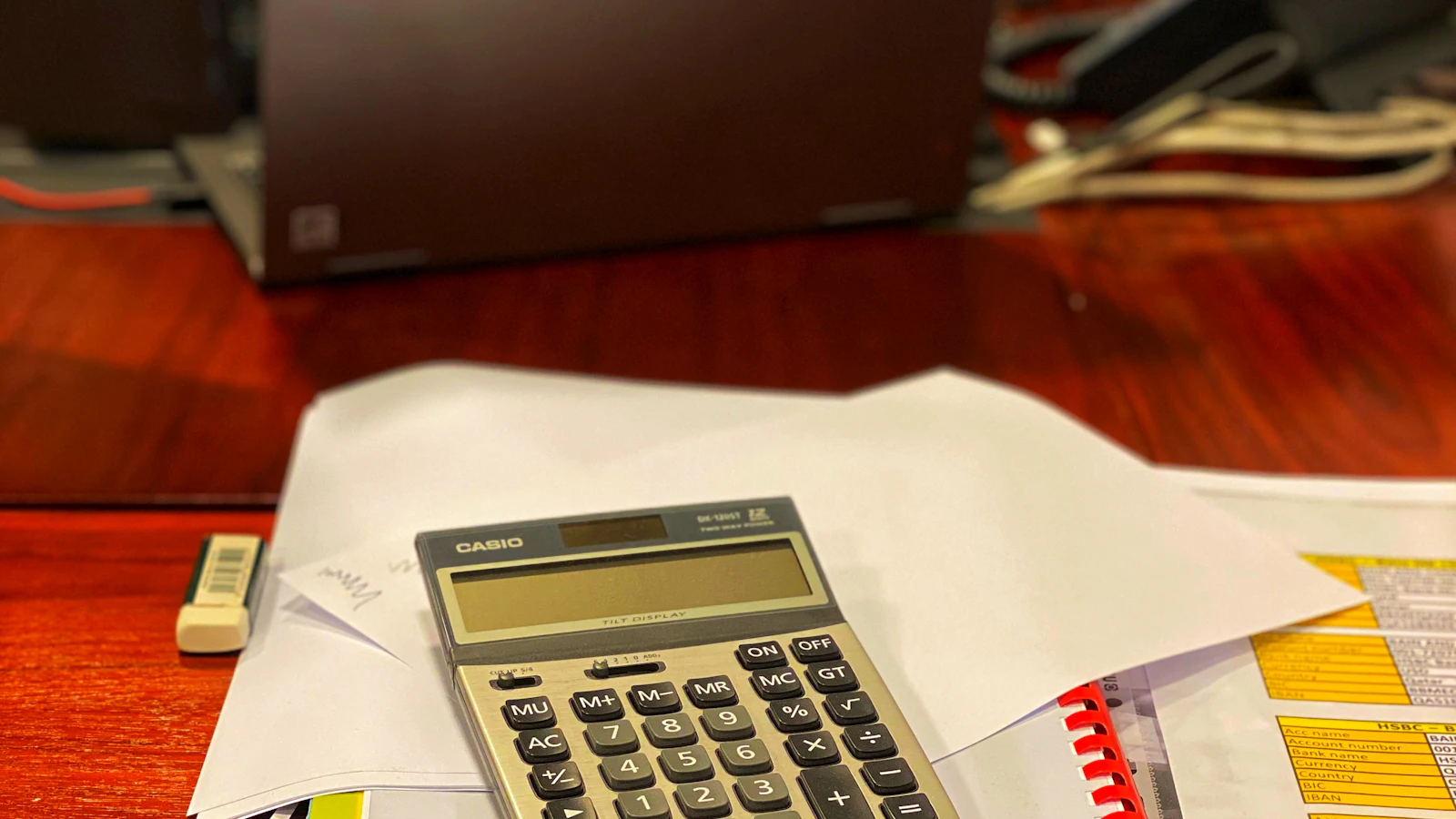
The year in seven controls
- Dated evidence linked to entries.
- Chronological journal and account-by-account ledger.
- Trial balance reviewed during the year.
- Inventory of assets and liabilities at close.
- Financial statements under the applicable model.
- Partner approval within six months.
- Filing within 30 days after approval.
1. Build accounting that can be proved
Law 9-88 and the CGNC require national-currency, double-entry accounting supported by source documents. Every entry must lead back to its origin, content, account assignment and evidence.
| Flow | Evidence to organise |
|---|---|
| Sale | order or ticket, applicable invoice, settlement |
| Purchase | supplier invoice, receipt, payment |
| Bank | statement, advice and reconciliation |
| Cash | opening, operations, count and variance |
| Stock | receipt, issue, transfer, loss and count |
| Payroll/tax | calculation, filing and payment proof |
A photograph lost in a chat thread is not filing. Name it, retain the useful original and link it to a reproducible entry reference.
2. Maintain books and controls during the year
The journal orders transactions through time; the ledger groups them by account; the trial balance summarises movements and balances. Each view answers a different control question, and none is replaced by an invoice list.
- Transmit documents on an agreed frequency.
- Reconcile sales with cash, cards and transfers.
- Match customer and supplier items instead of forcing balances.
- Control bank and tills.
- Review suspense and old amounts.
- Freeze a backup before a material correction.
Published law allows a simplified model under turnover conditions, but simpler presentation does not remove transactions or supporting evidence.
3. Close the period before printing a balance sheet
At closing, the SARL identifies and values assets and liabilities. Work includes physical stock, fixed assets, collectable receivables, complete liabilities, correct period cut-off, depreciation and impairment.
- Inventory: existence and value, not merchandise quantities alone
- Cut-off: deliveries, invoices and payments around closing
- Estimates: documented assumptions and approvals
- Statements: balance sheet, CPC and the other documents required by the model
- Timing: statements normally established within three months under accounting law
A reliable close explains a difference with evidence or a decision; it does not tune profit to a preferred answer.
One deadline does not cancel another
Three months to establish statements, six months to approve, 30 days to file and the tax deadlines concern different duties. Build the calendar from the company’s actual closing date.
4. Approve, then file
Article 70 of Law 5-96 submits the management report, inventory and financial statements to partner approval within six months after closing. The documents, proposed resolutions and any statutory auditor’s report go to partners at least 15 days before the meeting.
| Step | Legal marker |
|---|---|
| Prepare statements | normally within three months after close |
| Send partner pack | at least 15 days before meeting |
| Approve | within six months after close |
| File with registry | within 30 days after approval |
Registry filing concerns approved statements and is centralised through the commercial register. It does not replace the tax return, whose deadline is separate.
5. Assign responsibility clearly
The manager remains responsible for preparation and company procedure even when bookkeeping and review are outsourced. The accountant builds records from what the company supplies; a statutory auditor, where appointed, performs a separate role.
- Name an internal evidence owner.
- Set a monthly delivery date.
- Sign sensitive reconciliations.
- Trace approvals for credits, losses and manual entries.
- Keep approved exports and reports outside operating tools.
BelloPOS can preserve the sales, payments, stock movements and user actions a shop records in it, and since version 3.0 it keeps the journals, the general ledger, the trial balance and the financial statements on the Pro plan. Those remain inputs to reconcile — they are not the accounts as closed and approved.
Mistakes to avoid
- Sending evidence only once a year.
- Treating bank receipts as turnover.
- Counting merchandise only.
- Editing entries without a trail.
- Approving unfinished statements.
- Treating registry filing as the tax return.
Frequently asked questions
Which books does a SARL use?
The core includes the journal, general ledger and inventory book, with necessary subsidiary records. The trial balance is an essential summary control.
Can a small SARL use the simplified model?
Published Law 44-03 authorises it for covered entities with annual turnover at or below MAD 10 million. Confirm current eligibility and any sector chart.
When do partners approve the accounts?
Within six months after closing. The statutory pack must reach them at least 15 days before the meeting.
When are the statements filed?
Law 5-96 provides for filing with the court registry within 30 days after general-meeting approval.
Does BelloPOS keep statutory accounts?
It keeps the journals and the financial statements on the Pro plan, but the accounts are closed and signed off by the professional who answers for them.
What to take away
A well-run SARL closes each month before it closes the year: linked evidence, reconciled accounts, real inventory, final statements, regular approval and traceable filing.
Sources
The figures and rules quoted above come from these pages, read on the date given in the article.
- Ministry of Economy and Finance, General Code of Accounting Standardisation, read 1 September 2026
- Ministry of Economy and Finance, Law 44-03 amending Accounting Obligations Law 9-88, read 1 September 2026
- Ministry of Justice, Company Law 5-96, read 30 August 2026
- OMPIC, Central Commercial Register role and annual-accounts centralisation, read 1 September 2026
Give your accountant clean source data
Centralise point-of-sale transactions, payments and stock movements, then reconcile and export them on an agreed routine.
Read next
Other practical guides on the same subject: