
A butcher’s shop is the hardest trade to run on an ordinary till, for one simple reason: you do not buy what you sell. You buy a carcass or a quarter, you sell cuts at different prices per kilo, and in between there is bone, fat, trim and whatever is left unsold at closing. So the purchase price per kilo tells you almost nothing about your margin. Here are the three figures that do, and what the hardware can and cannot do.
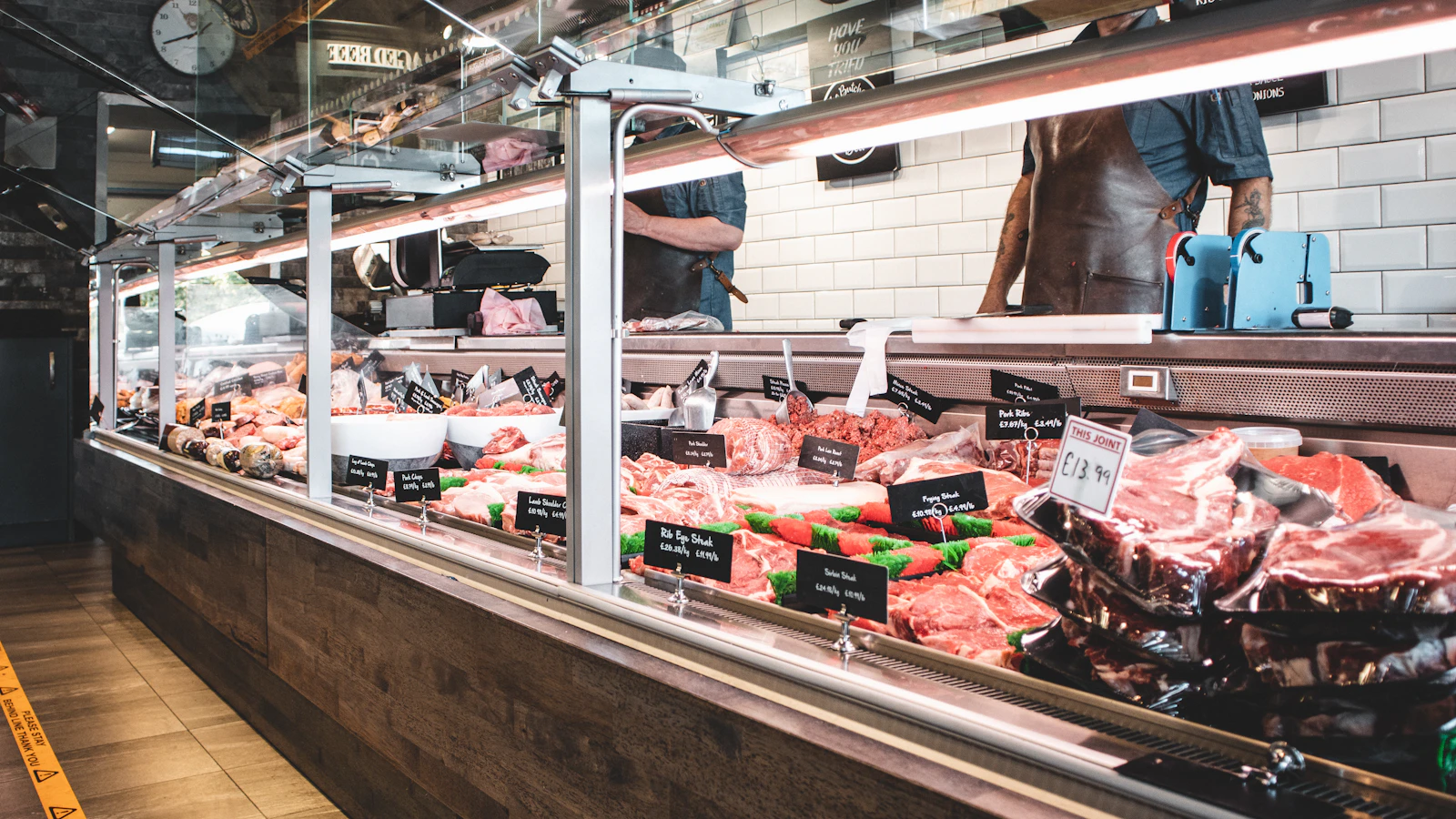
In short
- Sell by weight, with a price per kilo per cut, not an average price for “meat”.
- Yield is your real margin: what comes out as sellable cuts against what went in.
- Evening waste gets recorded, every day, or it disappears into the average and you never see it.
- BelloPOS does not drive a label-printing scale. The weight is keyed at the till; said before you buy.
- Eid and Ramadan make a huge share of the year: prepare stock and staff, not promotions.
What makes this trade different
Five realities that exist in no other trade in this series, and they explain why the paper notebook survives so well here.
| What is different | What it implies |
|---|---|
| You buy wholesale and sell cuts | The purchase price per kilo is not the cost of what you sell: it has to be spread across cuts of unequal value. |
| The goods lose weight | Bone, fat, trim, evaporation. Yield decides the margin far more than the displayed price does. |
| The price moves often | Your buying rate changes, sometimes week to week. A price frozen in a product record has you selling at a loss without seeing it. |
| Everything is sold by weight | An “item” does not exist: every sale is a variable quantity, and the receipt has to show weight, price per kilo and total. |
| The day ends with unsold stock | What is left is marked down, transformed or binned. Unrecorded, it becomes margin that evaporates with no explanation. |
The functions you genuinely need
Few functions, but they have to be the right ones. And one limit that should be known before purchase, not after.
- Selling by weight: An item “rib” with a price per kilo, and a quantity keyed in kilos and grams. The receipt must show weight, price per kilo and total: that is what makes the price checkable by the customer.
- A price per kilo per cut: Not a “beef” price. Every cut is a line with its own price, or you will never know which one keeps you alive.
- Fast price changes: Changing the day’s prices per kilo has to take two minutes, because it genuinely happens often.
- Reports by product: How many kilos per cut, every day. That is what tells you what to order and what to stop.
- What BelloPOS does not do: It does not drive a connected label scale: the weight is read on the scale and keyed into the till. Nor does it calculate your cutting yield: that calculation is yours, and the software gives you the kilos sold to do it with.
A typical day, from first customer to closing
A typical day, from the morning delivery to closing.
- At goods-in, weigh and record what arrives: total weight and purchase price per kilo. Everything else rests on it.
- Set the day’s prices per kilo by cut, starting from the purchase price and your usual yield.
- Sell by weight, with a receipt showing the weight and the price per kilo.
- Record cutting and trim at the end of the morning: what went to waste, fat and bone.
- Check kilos sold per cut at midday to adjust what you push in the afternoon.
- In the evening, record the unsold and where it went: markdown, transformation, loss.
- Compare kilos in against kilos sold over the week. The gap is your real yield.
Hardware: what earns its place, and when
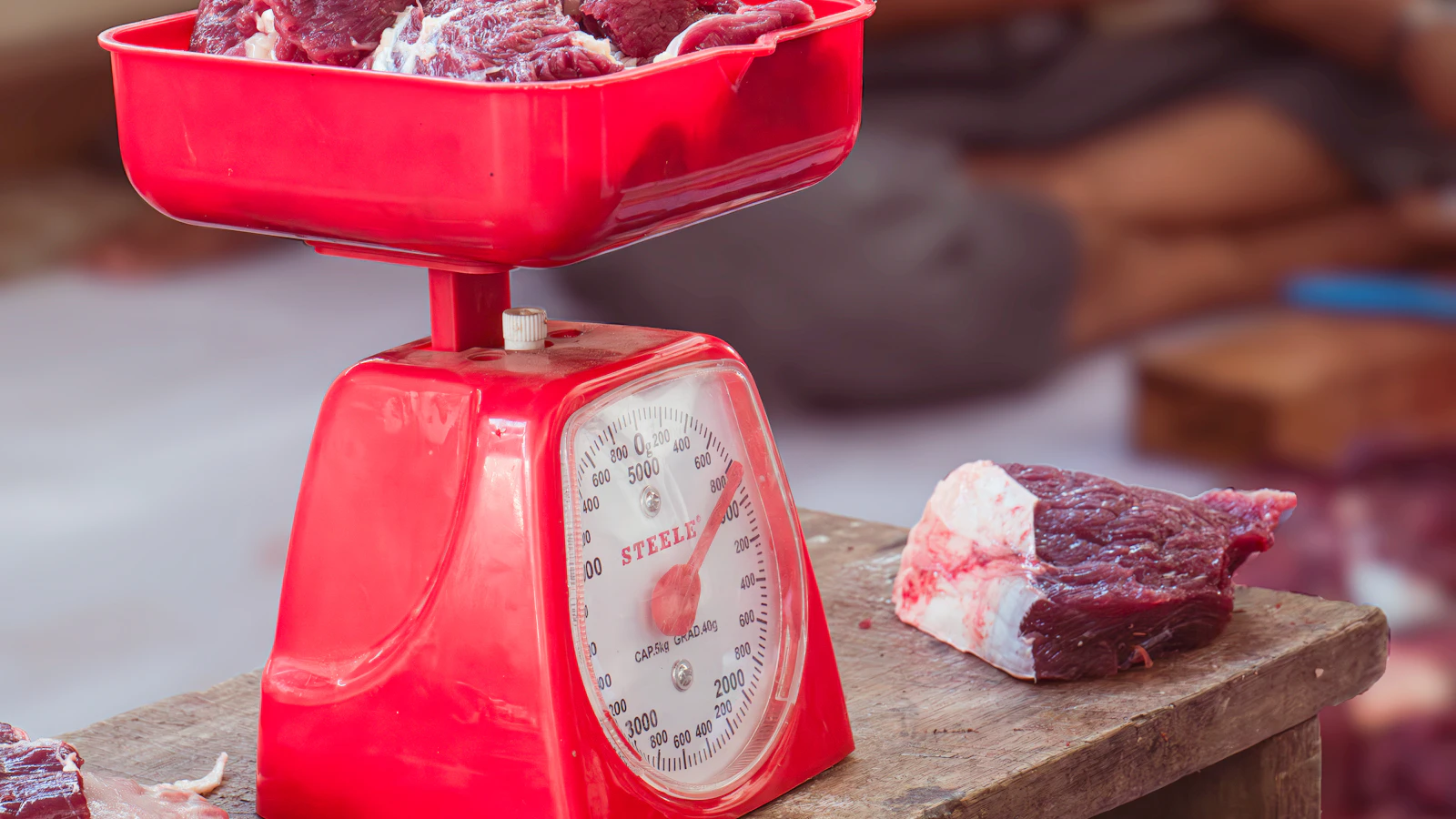
The only trade in the series where the scale comes before everything else, including the computer.
| The equipment | Useful? | Why |
|---|---|---|
| An approved scale | Essential | It is the instrument of sale. For verification and measuring-instrument control obligations, ask the competent service: those are metrology rules, not software settings. |
| A computer | Yes | To hold prices per kilo, the history and reports by cut. BelloPOS runs on it offline, which suits a neighbourhood butcher. |
| A receipt printer | Yes | A weight receipt is also what prevents arguments about price. |
| A connected label scale | It depends | Useful in self-service, where the customer picks up a labelled tray. BelloPOS does not drive one; in that case keep the scale and its own software for labelling. |
| A cash drawer | Yes | Plenty of cash, and often two people behind the counter. |
In Morocco, in practice
Eid al-Adha shapes a Moroccan butcher’s year as no commercial event shapes any other trade: a period of intense preparation, then a sharp collapse in red meat demand in the days that follow, because households are eating their own. It is prepared weeks ahead, on stock, orders and staffing, and it reads very clearly in last year’s kilos sold if you kept them.
Ramadan, by contrast, shifts sales rather than reducing them: buying concentrates in the late afternoon, with different baskets and demand tilting towards particular cuts. For the rest of the year, neighbourhood custom is loyal and price-sensitive, but even more sensitive to consistency of cutting: this is a trade people return to for the person as much as for the price, which makes the customer file less useful here than steadiness of service.
What it costs, and where to start
A shop’s budget splits in two, and the two should not be confused. Software on one side, hardware on the other. The software can be free: BelloPOS Lite is a free lifetime licence covering sales, stock, receipts, barcode scanning and up to three users, entirely offline. The hardware is paid for once and kept for years.
If the business grows, the two tiers above are bought once rather than subscribed to: BelloPOS Go at 9,000 MAD opens up unlimited users, roles and permissions and invoice export, and BelloPOS Pro at 40,000 MAD adds the analytics dashboard, reporting, networked terminals and the restaurant module (prices recorded in July 2026). Always run the five-year sum before comparing with a monthly subscription.
Your first seven days
- Install BelloPOS and create one line per cut, with its price per kilo, not a single “meat” line.
- Check that a printed receipt really shows weight, price per kilo and total.
- Create a stock entry at every delivery, in kilos, with the purchase price.
- Create a loss line for waste and unsold stock, and get into the habit of entering it every evening.
- Pull the kilos-sold-per-cut report at the end of the first week.
- Compare kilos in with kilos sold: your real yield appears, often for the first time.
- Adjust prices per kilo from that yield, not from the shop next door.
The other solutions worth knowing
We are not the only option, and a good guide says so. Here are the international solutions that come up most, with an honest note on what each is worth to a Moroccan business.
| Tool | What it is worth, and for whom |
|---|---|
| Odoo POS | Open source, and the till is only one module of a suite that also handles stock, purchasing and accounting. The strongest choice when you are growing and want everything in one place. In exchange, it takes the longest to set up. |
| Loyverse | A free till for Android tablets or iPad, very easy to pick up, with paid add-ons for team management and advanced stock. A good choice on the move, but the data lives in the cloud. |
| Square | Very popular in North America and Europe. The software is free because Square earns from processing card payments. That is precisely the catch here: check first whether the service covers Morocco. |
Check this before choosing a foreign tool
A word of caution before getting excited about a foreign tool. Many of them are free because they earn from card acceptance, and that side depends on country-by-country agreements. In Morocco, card acceptance goes through a terminal supplied by your bank or an approved payment institution. Before building your business on an app, check two things: that it is actually available in Morocco, and that it can produce a document carrying the mandatory Moroccan invoice fields.
The mistakes we see most often
- One price per kilo for all meat. You are subsidising your best cuts with your worst.
- Not recording waste. It then hides inside the yield and becomes impossible to correct.
- Setting prices from the shop next door. They have neither your purchase price nor your yield.
- Selling without a weight receipt. It is the first cause of arguments at the counter.
- Buying a connected scale expecting it to manage the business. It weighs and labels; it does not calculate your margin.
Frequently asked questions
Which till suits a butcher’s shop in Morocco?
One that sells by weight with a price per kilo per cut, prints a receipt showing weight and price per kilo, and reports kilos sold per product. BelloPOS Lite does that free and offline. What it does not do, and this should be known before buying, is drive a label-printing scale.
How is the selling price per kilo calculated?
From the purchase price per kilo of the whole piece, then adjusted for yield: out of a hundred kilos bought, how many come out as sellable cuts. That ratio, specific to your cutting and your supplier, sets your prices, not the price displayed across the street.
Do I need a scale connected to the till?
Only if you sell self-service with labelled trays. For counter service, an approved scale next to the till is enough: read the weight, key it in. It is one gesture, and it costs far less than an integration.
How do I track losses and waste?
By recording them every evening, in kilos, with a reason: unsold, markdown, transformation. An unrecorded loss is not an avoided loss, it is a loss you will pay for without ever knowing where it came from.
How should I prepare for Eid al-Adha?
With last year’s figures rather than an impression: kilos sold per week before and after, and which cuts. The collapse that follows the feast is as predictable as the rise before it, and it is the expensive half when you have ordered as usual.
What to take away
A butcher’s shop is not steered by the displayed price, it is steered by yield. Price per kilo by cut, kilos in against kilos sold, waste recorded every evening: three habits, none of them expensive, and you will finally know which cut keeps you alive and which one costs you. The scale weighs, the till counts, and the decision stays yours: that is the most honest division of labour we can offer.
Sell by weight, and know what it earns
BelloPOS handles selling by weight, a price per kilo per cut, losses and reports by product, entirely offline. Lite licence free for life.
Read next
Other practical guides on the same subject: