
A Moroccan café lives on three things: the terrace, the speed of the counter, and the consistency of the product. All the equipment follows from that, and the full list is below, station by station, with what is essential at opening and what waits. The difference from a French café is not style, it is arithmetic: when the average ticket is a few dirhams, it is not the margin per cup that decides but the number of turns a day and the glass breakage per month. We publish no equipment prices, for want of a verifiable Moroccan price list, but we give the questions to ask and the only public figures we have, the counter’s.
In short
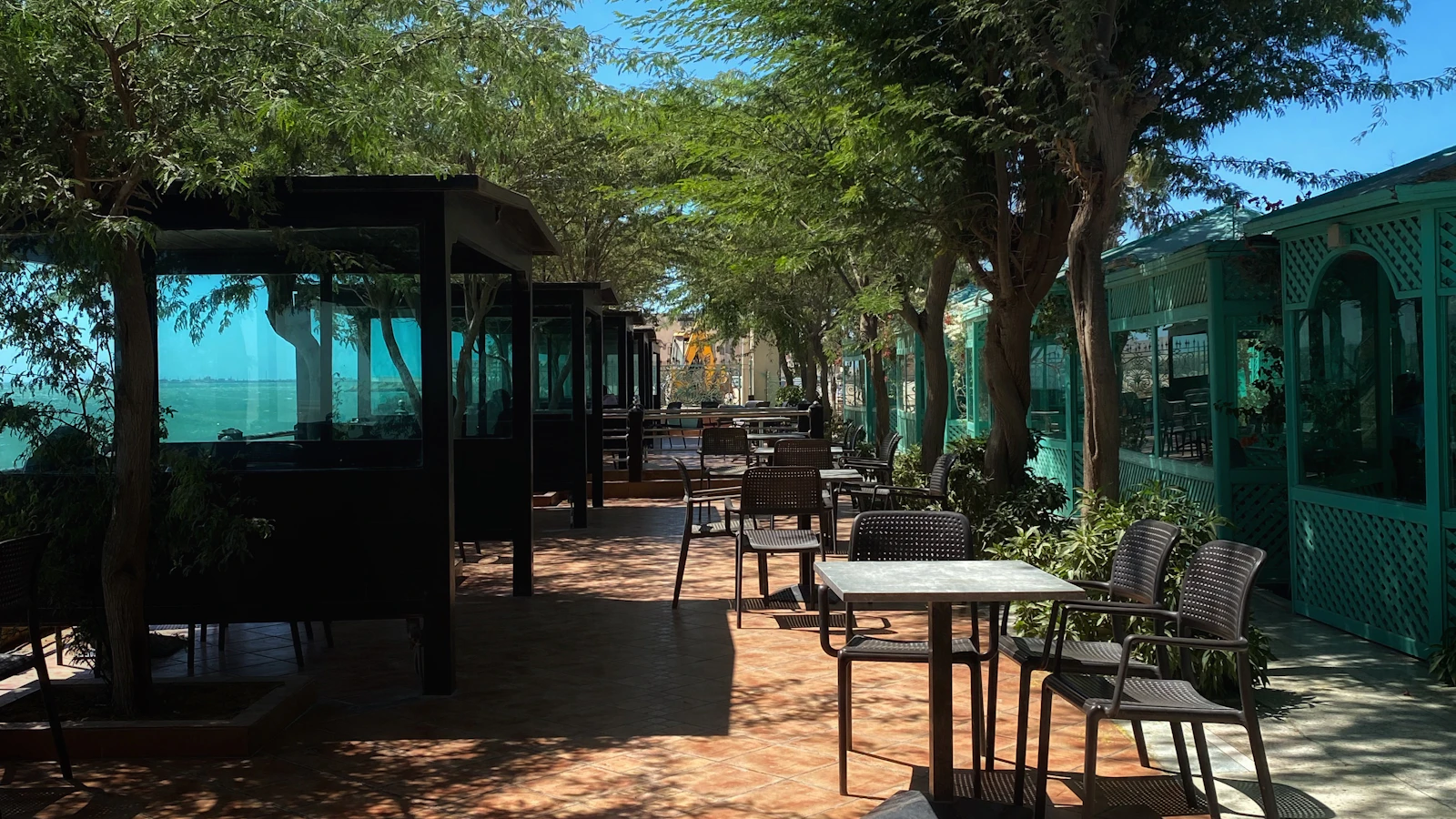
- The terrace first: permission, stackable furniture, shade, and a service route that does not cross the room.
- The machine and the grinder are one purchase. A good machine with a poor grinder makes poor coffee.
- Tea has its own kit, and it is routinely missing from lists copied from abroad: pots, trays, burners, glasses.
- Glass breakage is a budget line, not an accident. Count it and buy accordingly.
- The counter can be priced: 4 800 to 11 500 MAD for a complete till station, or zero dirhams of software on an existing PC.
The list, station by station
It holds for a neighbourhood café with a terrace, forty to eighty seats. A tea room with pastries adds the display case and the refrigeration; a city-centre coffee shop shifts the budget towards the machine and the furniture.
| Station | Essential at opening | What can wait |
|---|---|---|
| Coffee | Two-group espresso machine, dosing grinder, tamper, milk jugs, filters and descaler. | The second grinder, the filter machine, speciality alternatives. |
| Tea and drinks | Teapots, trays, burners or rings, kettle or samovar, tea glasses, citrus press. | The smoothie blender, the slush machine, the water fountain. |
| Cold and storage | Bottle fridge, ice bin, cabinet for milk and juice, thermometer. | The refrigerated pastry display, the ice machine, the freezer. |
| Counter and service | Stainless worktop, double sink, glass washer, trays, sugar and napkin dispensers. | The full-size dishwasher, the slicer, the panini press. |
| Room and terrace | Stackable tables and chairs, parasols or awning, lighting, ventilation, compliant washroom. | Room air conditioning, the sound system, the television, fixed furniture. |
| Checkout | Till and software, receipt printer, cash drawer, card terminal. | Second till station, customer display, tablet ordering at the table. |
Two stations on this list are always underestimated: the glass washer, because a café runs on clean glassware and nothing else, and shade on the terrace, because a terrace in full sun at two in the afternoon is an empty terrace.
What is specific to a Moroccan café
These four points are what make equipment lists copied from a European guide unusable here.
- The terrace makes the money: and it is applied for at the commune before it is fitted out. The furniture has to stack and come inside every evening, which rules out half the handsome catalogue furniture.
- Mint tea is a service, not a drink: it ties up a pot, a tray, a burner, glasses and preparation time. A menu that sells a lot of it needs its own station at the counter, or it blocks the coffee machine.
- The ticket is low, the turn is everything: at a few dirhams a drink, profitability comes from footfall and from how long a table is occupied. That is what justifies fast checkout and a short menu, not a more expensive machine.
- Breakage and lost glassware: in a high-volume café this is a real monthly line. Buy one model of glass, in quantity, from a supplier who will still have it in six months.
There is a fifth, seasonal point: in tourist cities, summer changes the menu, the opening hours and the number of staff. Kit sized for the low season saturates in July, and the reverse ties up money eleven months out of twelve.
The buying order, in six steps
As with a restaurant, the order is a constraint and not a preference.
- Settle the terrace: permission, area, shade, and the service route. It decides the number of seats, and so everything else.
- Check the electricity and the water before buying the machine. A two-group machine needs a supply and a water feed many premises do not have, and a softener is not optional in hard water.
- Buy the machine and the grinder together, from the same supplier, with the service contract in writing. The grinder is what makes the difference in the cup.
- Equip the tea station with its own worktop, burners and glass stock.
- Take the refrigeration and the glass washer, in that order, then the furniture.
- Build the checkout station and run a dry day with the team, room and terrace service included.
In a café the classic mistake is to swap steps 2 and 3: the machine arrives before the wiring has been checked, and it waits three weeks in its box while the warranty runs.
Why there is no machine price here
A professional espresso machine sells in Morocco from entry-level new to high-end import, with an active second-hand market and very different service contracts. No verifiable public price list covers that range, and publishing an average would have you negotiating against a false benchmark. What is verifiable is the displayed price of checkout hardware, and that is below.
The three numbers to follow from month one
The first is tickets per day and per part of the day. A café is not steered by monthly revenue but by hours: if the morning is double the evening, the staffing, the stock and even the opening time organise around that. Our piece on the numbers to check every week explains where to read them in a till report.
The second is the average ticket, and it moves more than people expect in a café: a pastry offered at the counter changes it far more than a price rise, and without driving anyone away. The method is in average basket: measure it, then move it.
The third is breakage, glassware and crockery, counted in pieces and in dirhams every month. It is the only way to know whether it comes from service, from washing or from the glass you chose, and it is a buying decision rather than a fact of life.
The counter, with the only public prices we have
Figures read at a Moroccan checkout hardware reseller on 28 July 2026. Hardware only, software excluded.
| What the counter needs | Price marker | What decides it |
|---|---|---|
| Complete touchscreen till station | 4 800 to 11 500 MAD | Screen, printer and drawer, built in or separate. |
| POS software | 0 MAD with BelloPOS Lite, otherwise a monthly subscription | In a café, entry speed matters more than the number of features. |
| An existing PC | 0 MAD of extra hardware | An offline till runs on the computer you already have. |
| Receipt printer | included in the complete kits | 80 mm thermal; for the terrace plan the server’s route, not a printer per table. |
| Card terminal | supplied by the bank or payment institution | See payment methods for a Moroccan shop before signing. |
- What the till has to do in a café, fast receipts, terrace, drinks by the unit: POS for cafés and coffee shops.
- The detail of each peripheral and what is superfluous: the POS hardware guide.
- The overall budget for a checkout station, hardware and software: what a cash register costs in Morocco.
Mistakes to avoid
- Buying the machine before checking power and water. It will wait in its box with the warranty running.
- Saving money on the grinder. It is the one appliance where the saving can be tasted.
- Choosing terrace furniture that does not stack. It has to come inside every evening, and it will not fit.
- Forgetting the tea station. On a Moroccan menu it occupies the counter as much as the coffee does.
- Buying glassware in small quantities and mixed models. Breakage leaves the service mismatched within two months.
Frequently asked questions
What budget do you need to open a café in Morocco?
There is no single honest figure: the terrace, the level of machine, new against used and the state of the premises make the total vary threefold. Have three suppliers quote the same written list. The only verifiable public amounts we publish are the counter’s: 4 800 to 11 500 MAD, read on 28 July 2026.
Which coffee machine for a neighbourhood café?
Two groups if you serve more than a hundred coffees a day, one group below that, and in every case a grinder to match the machine. The deciding criterion is not the brand but the service: who comes out, how fast, and with which parts held in Morocco.
Does a café need a till?
Yes, and for a reason that is not tax: without one you do not know what you sell by part of the day, which is exactly what a café lives on. BelloPOS Lite is free for life and is enough for that.
How do you equip the terrace without getting it wrong?
Permission first, stackable furniture second, shade third. Plan a lockable store for bringing the tables and chairs in every evening: it is that constraint, not the style, that should drive the choice.
Does a tea room need different equipment?
It adds tea service at scale: pots, burners, trays and glasses in quantity, and usually a pastry display with the refrigeration that goes with it. The coffee machine can be more modest; the glass washer never.
How much glassware should you buy?
Take the number of seats, multiply by the turns you are aiming for in a service, and add the breakage you expect. Buy one model, in quantity, from a supplier who can resupply it in six months.
What to take away
A café is equipped starting from the terrace and the counter, not from the catalogue. Settle the permission and the shade, check water and power before buying the machine, take the grinder with it, give tea its own station, and buy one model of glass in quantity. The rest, air conditioning, screens, refrigerated display, gets decided after the first summer, with ticket counts per part of the day to back it up.
A fast counter beats an expensive one
BelloPOS Lite is free for life, runs on an existing Windows PC and entirely offline: drinks by the unit, fast receipts, terrace service, and a report by part of the day.
Read next
Other practical guides on the same subject: