
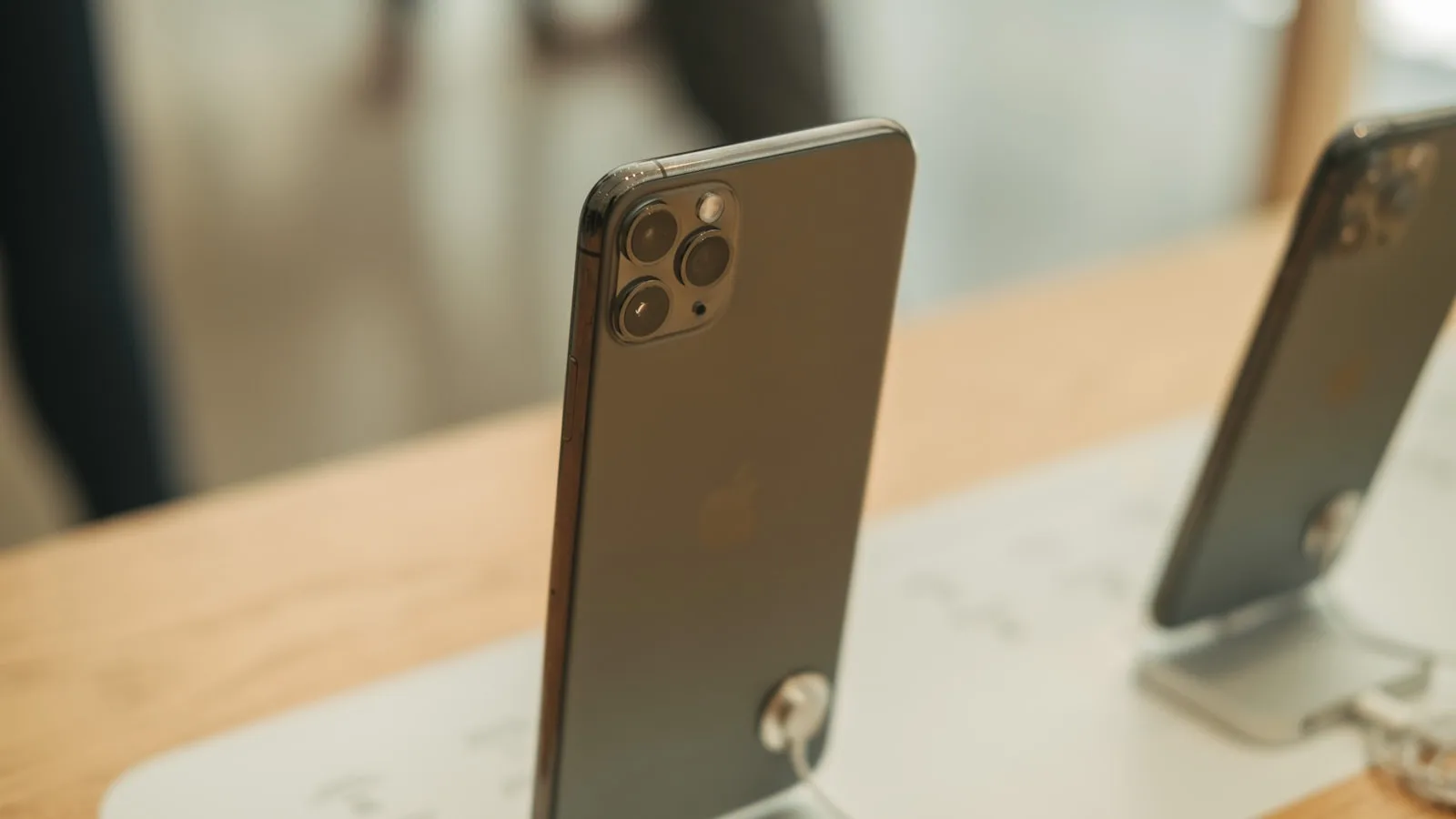
An electronics shop sells few units at high values. You do not ring up three hundred tickets a day, you ring up fifteen, and each one commits you to a warranty running for months. The till’s job changes completely: it is no longer about taking payment fast, it is about knowing which exact device went to which customer, and when its warranty expires.
In short
- The serial number is your real stock reference. Two phones of the same model are not the same item.
- Warranty attaches to the sale, not to a notebook. Otherwise you are arbitrating from memory six months later.
- The receipt is your evidence. Without a findable history, every after-sales dispute resolves against you.
- Margins vary enormously between a smartphone and an accessory. Enter purchase prices or you are flying blind.
- Stock is small in number and very expensive. One unit missing costs here what a whole aisle costs elsewhere.
What makes this trade different
Electronics inverts nearly every priority of classic retail.
| The constraint | What it demands of your till |
|---|---|
| Every unit is unique | Tracking by serial number or IMEI, not just by model. It is the function that separates this sector from all the others. |
| Warranties run for months | The sale date and warranty period attached to the device, findable in three seconds when the customer returns. |
| High values per ticket | Mixed payments, deposits and sometimes instalments, with a customer balance tracking it. |
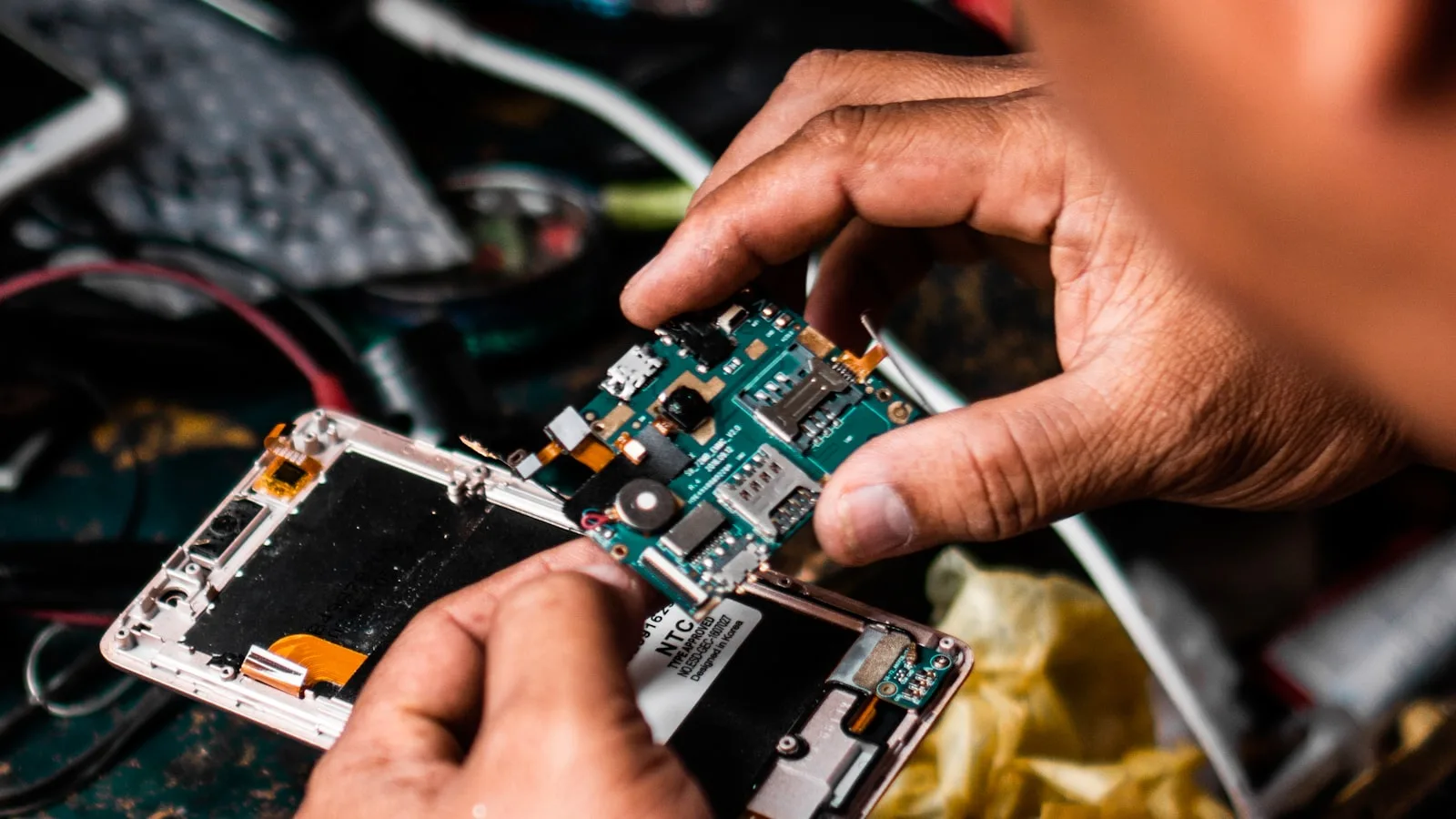
| After-sales service | A way to trace a device that has gone in for repair, its date and its state, without a separate notebook. |
| Very uneven margins | Purchase price tracking per item, because an accessory can earn more than a 6,000 dirham phone. |
| Few units, very high value | Frequent counts and strict permissions: here, a missing unit is not a rounding error. |
The functions you genuinely need
Five functions matter, and the first barely exists anywhere else.
- Serial number tracking: Each unit enters stock with its serial number or IMEI and leaves with it. At any moment you know which precise unit is with which customer, which settles half of after-sales disputes before they start.
- Customer records with purchase history: The customer returns eight months later without a receipt. Their name is enough to find the device, the date and the warranty.
- Customer balances and deposits: An order against a quote, a deposit paid, a balance on collection. Common on large amounts and impossible to hold in your head.
- Purchase price tracking: Essential when margins run from a few percent on a flagship phone to far more on a cable.
- Strict permissions: On 6,000 dirham items, unrestricted voids and discounts are not defensible options.
A typical day, from first customer to closing
An electronics sale, from delivery to after-sales.
- A delivery arrives: each unit enters stock with its serial number and purchase price.
- A customer picks a device: staff scan the box and the specific serial number goes onto the receipt.
- Payment is taken, possibly partly as a deposit, with a customer balance if needed.
- The receipt carries the serial number and the date, which starts the warranty running.
- Eight months later the customer returns with a problem: you find the device by their name or the number.
- The device goes for repair, traced on its record.
- On return, the handover is logged and the history stays complete.
Hardware: what earns its place, and when
Little hardware, but the scanner has to be good: you are scanning serial numbers, often in small print.
| Hardware | Why, in electronics | Priority |
|---|---|---|
| A PC or touchscreen station | Ticket volume is low. Do not over-invest here. | Essential |
| A thermal printer | The receipt is proof of purchase and warranty support. It must carry the serial number. | Essential |
| A 2D barcode scanner | Serial numbers and IMEIs are often in 2D codes on the box. A 1D scanner will not read them. | Essential |
| A cash drawer | Useful, but a significant share of value comes by card or transfer. | Advised |
| A label printer | For loose accessories and refurbished stock with no barcode. | Useful |
| A second screen | Little use: selling here is advisory, not a queue. | Rarely useful |
In Morocco, in practice
The Moroccan electronics market has two particularities that weigh on management. The first is the importance of refurbished and parallel-import stock: a significant share arrives with no usable barcode and no clear manufacturer warranty. That makes serial number tracking even more necessary, since it is your only evidence of what you sold and what you are warranting yourself.
The second is the weight of advice and trust. In Casablanca, Rabat, Tangier and Marrakesh, customers compare online before coming in and come back to you when something goes wrong. A shop that can retrieve the purchase date and the exact device in three seconds, without digging through a notebook, gains an advantage price does not offset. That is where the till earns you money, not at the moment of payment.
What it costs, and where to start
A shop’s budget splits in two, and the two should not be confused. Software on one side, hardware on the other. The software can be free: BelloPOS Lite is a free lifetime licence covering sales, stock, receipts, barcode scanning and up to three users, entirely offline. The hardware is paid for once and kept for years.
If the business grows, the two tiers above are bought once rather than subscribed to: BelloPOS Go at 9,000 MAD opens up unlimited users, roles and permissions and invoice export, and BelloPOS Pro at 40,000 MAD adds the analytics dashboard, reporting, networked terminals and the restaurant module (prices recorded in July 2026). Always run the five-year sum before comparing with a monthly subscription.
Your first seven days
- Day 1: create your families and your twenty best-selling models.
- Day 2: enable serial number tracking on the relevant families.
- Day 3: enter existing stock with serial numbers, unit by unit.
- Day 4: enter purchase prices so you can see real margins.
- Day 5: create records for recent customers and test the search.
- Day 6: set void and discount permissions per user.
- Day 7: run a full count, which becomes your starting point.
The other solutions worth knowing
We are not the only option, and a good guide says so. Here are the international solutions that come up most, with an honest note on what each is worth to a Moroccan business.
| Tool | What it is worth, and for whom |
|---|---|
| Odoo POS | Open source, and the till is only one module of a suite that also handles stock, purchasing and accounting. The strongest choice when you are growing and want everything in one place. In exchange, it takes the longest to set up. |
| Shopify POS | Mainly interesting if you already sell online with Shopify, since the shop stock and the store stock become the same thing. Hard to justify if you are not already in that ecosystem. |
| Loyverse | A free till for Android tablets or iPad, very easy to pick up, with paid add-ons for team management and advanced stock. A good choice on the move, but the data lives in the cloud. |
Check this before choosing a foreign tool
A word of caution before getting excited about a foreign tool. Many of them are free because they earn from card acceptance, and that side depends on country-by-country agreements. In Morocco, card acceptance goes through a terminal supplied by your bank or an approved payment institution. Before building your business on an app, check two things: that it is actually available in Morocco, and that it can produce a document carrying the mandatory Moroccan invoice fields.
The mistakes we see most often
- Tracking models rather than units. Without serial numbers you can prove neither what you sold nor what you are warranting.
- Keeping warranties in a notebook. Six months later the notebook is gone and the customer is right by default.
- Buying a 1D scanner. Many serial numbers are in 2D codes. The scanner will never read them.
- Leaving discounts unrestricted. On amounts like these, a few percent given away casually wipes out the day’s margin.
- Counting stock once a year. With units worth thousands of dirhams, a gap has to surface in weeks, not months.
Frequently asked questions
Which POS should I choose for an electronics shop in Morocco?
One that can track items by serial number or IMEI, attach a warranty to a sale, keep customer records with history and control discounts strictly. Checkout speed, decisive elsewhere, is the last of your concerns here.
Why track serial numbers?
Because two units of the same model stop being interchangeable the moment a warranty or a dispute is involved. The serial number tells you which precise device left, when, and to whom. That is what lets you refuse an unjustified claim, or accept a valid one without hesitating.
How do I manage warranties?
By attaching the sale date and warranty period to the unit sold, inside the till, and printing the serial number on the receipt. When the customer returns, a search on their name or the number is enough. It is immeasurably more reliable than a notebook, which goes missing precisely when it is needed.
How do I handle deposits on orders?
With a customer record and a balance. The customer pays a deposit, the balance stays outstanding and is settled on collection. Customer records are in BelloPOS Lite; the balances carnet that carries the deposit starts with Go.
How do I know my real margin?
By entering the purchase price of each unit on delivery. In electronics this is essential, because margins run from very thin on flagship devices to very comfortable on accessories. Without that data you believe you are earning on phones when you are earning on cables.
Is a free POS suitable for an electronics store?
For a single shop, BelloPOS Lite covers sales, stock, customer records and balances and label printing, free and offline. If you want detailed permissions to control discounting and per-salesperson activity reports, look at the tier above.
What to take away
In electronics, the till is a register as much as a payment tool. Track your units by serial number, attach warranties to sales, enter your purchase prices and control discounts. Those four decisions will earn you more, in disputes avoided and margin made visible, than any optimisation of the checkout ever will.
Start for free
BelloPOS Lite covers sales, stock, customer records and balances, barcode scanning and label printing, for up to three users. A free lifetime licence, entirely offline.
Read next
Other practical guides on the same subject: