
In Marrakech, restaurant POS must follow the real service: an indoor table, a terrace order and a meal served to a riad guest may not use the same route. The right system connects order taking, preparation, billing and closing without making staff re-enter data. It also keeps named accounts when the team changes with the season. BelloPOS Pro suits one restaurant using a local Windows network. It is not a hotel PMS, booking platform or Glovo and Yassir order aggregator.

In brief
- Draw three flows before the demo: dining room or patio, terrace, and riad guest service where applicable.
- A multilingual menu remains one catalogue. Translate labels without creating three products that split stock and sales.
- The kitchen needs an actionable order: table, course, doneness, modifiers, time and server.
- Give every seasonal worker an account. Remove access on departure without erasing their audit history.
- Test offline and restore a backup. A continuity promise is not a recovery procedure.
1. Cafe, restaurant or riad: three service maps
Our national restaurant POS guide covers the general feature set. In Marrakech, first draw the zones and responsibilities. One licence does not make a fast-turn cafe, a multi-course restaurant and a riad identical. Lodging and food service may need to be reconciled at a guesthouse, but they must not be confused.
| Business | Flow to configure | Service test | Boundary to write down |
|---|---|---|---|
| Cafe with terrace | Counter, room, terrace, table move and payment | Move a table outside without duplicating its bill | The terrace is not a second stock or trading day |
| Restaurant | Host, server, drinks, kitchen, courses, bill and closing | Send a starter then a main with doneness and a modifier | POS does not decide preparation order by itself |
| Riad serving meals | Guest, table or room reference, kitchen and restaurant payment | Retrieve the meal without recording it as a night | BelloPOS is not a PMS and holds no room reservations |
| Delivery | Channel, entry, preparation, courier handoff and reconciliation | Compare received order, kitchen ticket and settlement | No automatic aggregation without a demonstrated integration |
For each zone, record who can open a table, edit a line, fire the kitchen, comp an item, split the bill and close it. Then test a moved table, two merged tables, one diner paying early and an item voided after sending. Those cases reveal more than a vendor’s single pre-arranged order.
2. One menu in several languages, not several inventories
The sales menu, till screen, kitchen docket and customer receipt are four different outputs. Begin with one stable item identifier, then attach the available French, Arabic and English labels. If the product does not support translations, choose a short convention understood in the room and kitchen. Do not create the same tagine three times to show three languages: quantities, margin and sales ranking would be split.
- Item: One code, base price, category, validated tax and recipe or ingredient card when consumption is tracked.
- Variant: A size or preparation that genuinely changes price or quantity, not merely a translation.
- Modifier: Doneness, side, declared allergen, supplement or removal transmitted unambiguously to the kitchen.
- Set menu: Defined components tracked separately when the drink or dessert can change.
- Language: A readable customer label and stable operational name, tested on screen, receipt and printer.
Take twenty frequent sellers and prepare a truth sheet: name in every language, price, tax, category, preparation station, variants, supplements and ingredients needing attention. Ask a test customer to read the receipt and a cook to read the docket. A polished translation that truncates on paper, or a supplement that never reaches the kitchen, is not ready for service.
Language selection does not prove multicurrency. Keep the dirham as the reference, separate recording a card in POS from authorisation at the bank terminal, and clear any conversion rule with your adviser. Showing a euro equivalent does not authorise accepting or accounting for euros.
3. From table to kitchen without losing the order
A useful order reaches the right station at the right time. The bar does not need the same information as hot preparation or pastry. A small business may use a well-positioned kitchen printer. A multi-station team may prefer a kitchen display system. In either case, test the complete route amid the noise, heat and pace of a real service.
| Scenario | What the team performs | Acceptance evidence |
|---|---|---|
| New table | Server, covers, drinks and then food | Bar and kitchen receive only their lines with table and time |
| Change | Remove an ingredient, then change after sending | New instruction is visible and the old one is not prepared by mistake |
| Separate courses | Send or call starter, main and dessert at the intended time | Kitchen distinguishes prepare, hold and served |
| Terrace | Move, merge, split and then settle a table | No line disappears and no docket duplicates |
| Outage | Sell, print, close and restart without internet | Sale stays local and recovery is documented |
| Service close | Compare orders, voids, comps, payments and cash | Every difference has a user and reason |
If you also receive platform orders, use our method to centralise Glovo and Yassir orders. BelloPOS does not automatically pull them in. Until an integration is demonstrated end to end, create a distinct channel, enter once, print to the kitchen and reconcile the platform statement. If volume makes manual entry unsafe, choose an aggregator or compatible POS.
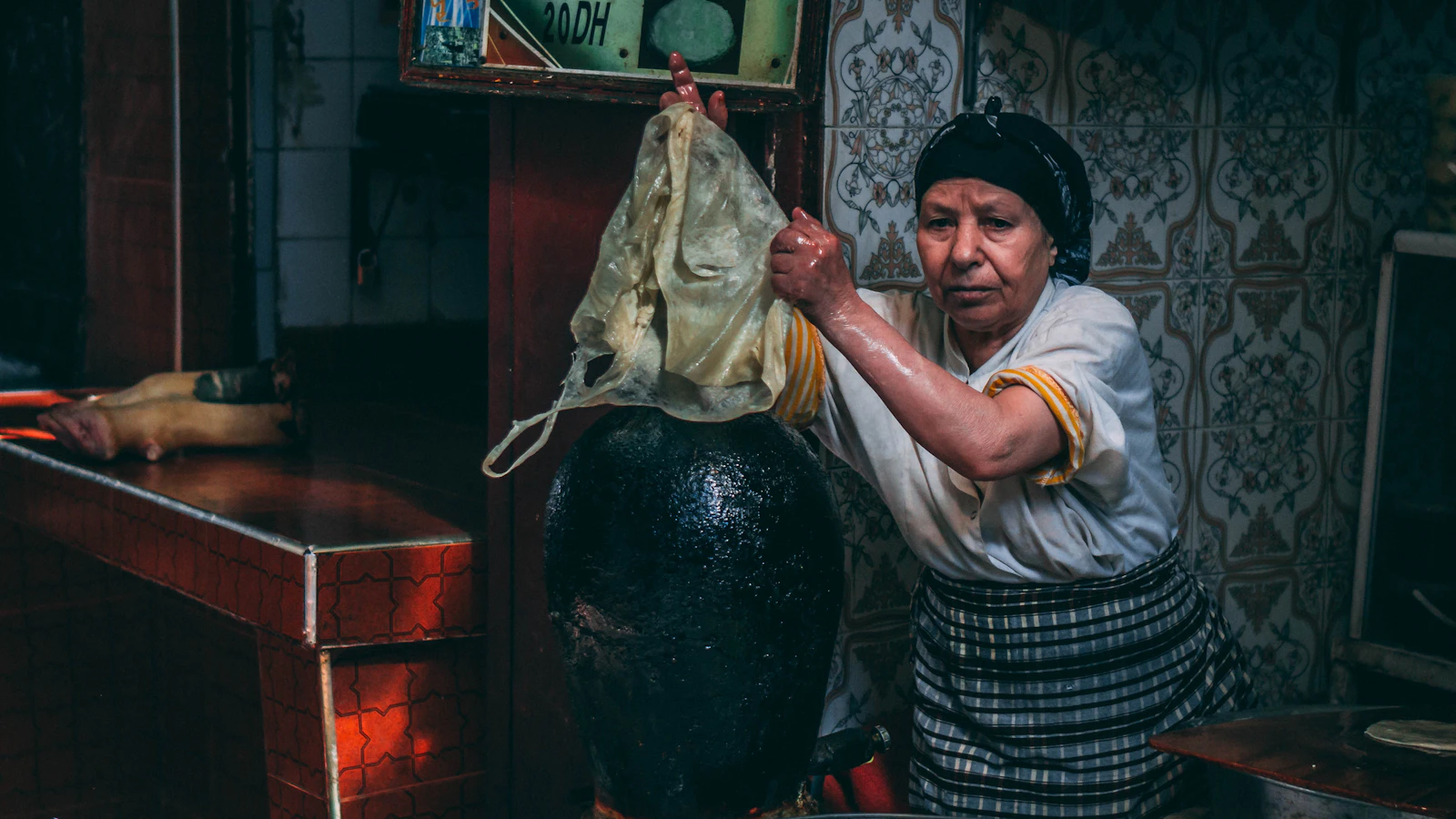
A riad needs a boundary between meal and room
A room number may be an operational reference, but it does not turn POS into hotel software. Write down who authorises a meal for later payment, what evidence the guest receives, how the amount reaches the stay record and who reconciles the systems. Without a certified integration, transfer remains a controlled manual procedure. Do not promise booking, channel management or accommodation invoicing from BelloPOS.
4. What the Marrakech data really says
The HCP 2023/2024 mapping counts 6,177 accommodation and food-service establishments in Marrakech prefecture, out of 61,875 profit-making establishments. The category combines accommodation and food service, so it gives neither a restaurant count, revenue nor POS adoption. It establishes only a large, varied local business base, which is why the use case must come before the product.
- Local fact: 6,177 establishments in the prefecture’s combined accommodation and food-service category.
- Constraint to test: Placement, cables, local network and service route at the exact address.
- National context: 2025 visitors and nights, not converted into a cover forecast.
- Internal measure: Covers, turns, ticket-to-kitchen time, voids, channel and average spend by service.
UNESCO describes a 700-hectare medina with a tangle of lanes, houses, souks, fondouks and traditional trades. That form proves no internet or power outage. It does justify checking register placement, cable runs, maintenance access and the route between terrace, patio and kitchen at the premises. A Gueliz showroom test cannot replace a test at the actual counter.
For 2025, the Tourism Ministry reports 19.8 million visitors and 43.4 million nights in classified accommodation across Morocco. Those are national totals, not Marrakech footfall or restaurant covers. They make a multilingual and multi-payment test reasonable, but cannot establish the nationality, spend or season of your customers. Measure those in your own reports.
5. Deploy before the season, then close access
Do not wait for the busy week. Import the menu, choose zones, create roles and rehearse two full services before switching. The free POS guide for Marrakech helps compare software, while the Marrakech till buying guide covers hardware, warranty and supplier checks.
| Timing | Work | Gate to pass |
|---|---|---|
| Days 1 to 3 | Create zones, tables, payments, users and twenty items | A complete table reaches kitchen, receipt and closing |
| Week 1 | Import menu, prices, variants, modifiers and preparation stations | Every item prints once at the right station |
| Week 2 | Train server, cashier, kitchen, manager and deputy | Each role resolves its permitted return, discount, transfer and fault |
| Before opening | Restore backup on another PC and print fallback procedure | Second machine reads the data and staff know the procedure |
| Every arrival | Create a named seasonal account with minimum rights | Nobody shares the manager code |
| Every departure | Close sessions, remove access and retain history | Account cannot log in and actions remain attributable |
For four weeks, record by service the covers, table turns, order-to-kitchen time, changes after sending, voids, comps and variances. Then compare your own busy and quiet periods. Do not borrow another restaurant’s number or assume covers triple. Only your series can size terminals and staff.
Mistakes to avoid
- Creating one item per language. Sales and consumption split across duplicates.
- Sharing the manager code with seasonal staff. Voids and discounts lose attribution.
- Confusing POS with PMS. A room reference manages neither stays nor bookings.
- Promising platforms without a test. A Delivery line is not Glovo or Yassir integration.
- Testing only at the counter. The docket must remain legible at bar, kitchen and terrace.
- Keeping a backup never restored. Recovery must work on another computer.
Frequently asked questions
Which POS should a Marrakech restaurant choose?
Choose for service zones, tables, kitchen stations, languages, rights, terminal count and offline operation. Test a complete service in the premises before comparing price.
Can POS manage a cafe and its terrace?
Yes if it can move, merge and split tables without losing lines, attribute the server, route preparation and close one trading day. Reproduce those moves in the demo.
How do I manage an Arabic, French and English menu?
Keep one item and identifier, then add supported translations. If the product lacks them, adopt a short shared label. Do not create three inventories for the same dish.
Does BelloPOS manage riad rooms?
No. BelloPOS is POS, not a PMS, booking engine or channel manager. A room may be a manual reference for a meal when the reconciliation procedure is written.
Do Glovo and Yassir orders arrive automatically?
Not in BelloPOS without a demonstrated additional integration. Enter them under a separate channel and reconcile settlements, or choose an aggregator or compatible POS when volume requires automation.
How should I manage seasonal employees?
Create a named account with minimum rights for each person, train on a real scenario, then disable it at departure. Keep the history and never share the manager code.
What to take away
In Marrakech, selection is won by the route, not feature-list length: zones and tables, one menu in useful languages, a clear kitchen order, named seasonal accounts and tested recovery. BelloPOS Pro covers these operations in one restaurant over a local Windows network. Hotel, booking, delivery aggregation and synchronised branches require dedicated systems and a defined connection.
Sources
The figures and rules quoted above come from these pages, read on the date given in the article.
- HCP, 2023/2024 Economic Establishment Mapping, results published March 2025
- UNESCO, Medina of Marrakesh, inscribed property description
- Moroccan Tourism Ministry, 2025 key figures, read 1 August 2026
Test one service before choosing
Install BelloPOS on Windows, create five tables and twenty items, then rehearse order, kitchen, bill, outage and closing with your team.
Read next
Other practical guides on the same subject: