
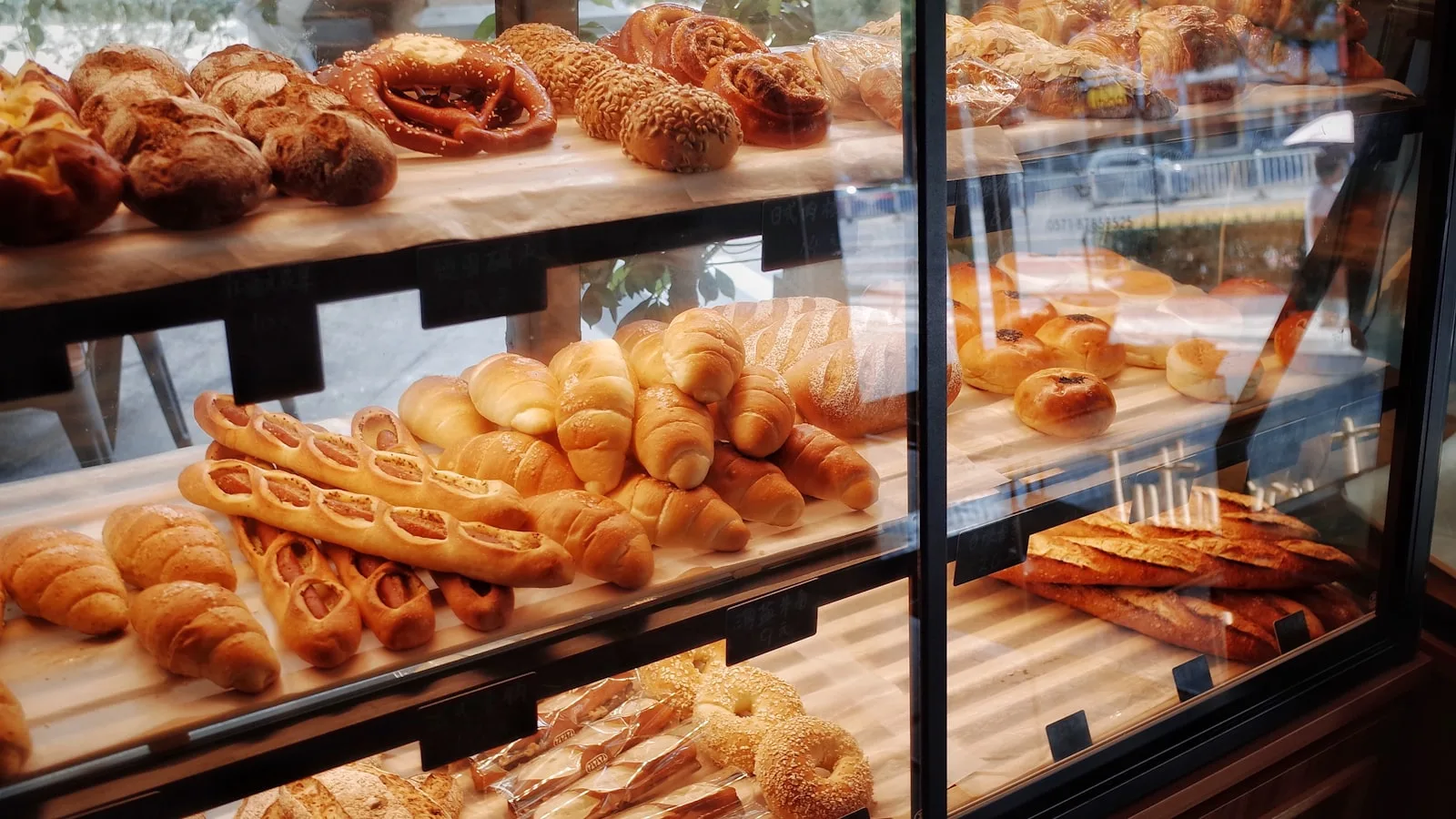
A bakery is really two businesses under one roof. Bread, sold in very high volume on a few centimes of margin, to customers who count every dirham. And patisserie, sold by weight or to order, on margins that have nothing in common with it. A bakery POS has to handle both, and above all tell you what you throw away in the evening.
In short
- Volume is won on speed. Bread has to ring up in one tap, with no search step.
- What you throw away is your real loss. Without waste tracking you bake blind every morning.
- Patisserie sells by weight or by piece: set both up, with your own printed labels.
- Orders with deposits must be recorded, or you will discover the problem on a wedding day.
- Ramadan and the feasts make your year. A till that keeps a comparable history is worth a fortune come February.
What makes this trade different
A bakery’s difficulties resemble no other trade’s. Here are the real ones, and what settles them.
| The difficulty | What it demands of your till |
|---|---|
| Margins of a few centimes on bread | Tracking purchase prices, from flour to packaging. Without a cost price, you do not know whether a batch is profitable. |
| Very high volume at precise hours | A grid where bread, msemen and harcha are immediately reachable. In the morning, everything must be one tap. |
| Production decided before opening | A sales history by day of the week, so you stop baking on a hunch. |
| Evening waste | A way to record what goes in the bin or is given away, or the loss stays invisible in the accounts. |
| Patisserie by weight | Clear sale units and printed labels, rather than a price recalled from memory each time. |
| Cake orders | A recorded deposit, a collection date, and a balance to settle. The notebook by the phone always ends up costing a customer. |
The functions you genuinely need
Five functions make the difference in a bakery. The rest is incidental.
- A grid built for the morning: Bread, baguette, wholemeal, msemen, harcha, batbout: these are what make the 7am queue. They should own the first screen, large and readable.
- Selling by weight and by piece: A slice of cake, a box of gazelle horns, a kilo of chebakia. The simplest approach is standard formats with a printed barcode label.
- Purchase and cost tracking: Flour, yeast, butter, sugar, packaging. This is what turns revenue into real margin, and it is essential when you earn centimes per unit.
- Orders with a deposit: A customer record, an amount paid, a date. Wedding and Eid orders are prepared weeks ahead and do not forgive being forgotten.
- History by day and by product: Friday is nothing like Tuesday. Knowing how many baguettes go each day of the week is what brings waste down.
A typical day, from first customer to closing
A bakery’s day, as a well-set-up till supports it.
- Before opening: you check the same day’s sales from last week to decide your batches.
- 6am: till opened, float counted, morning shift started.
- The rush: bread and pastries in one tap, mostly settled in cash.
- A cake order comes in: you create the record, take the deposit, note the collection date.
- Midday: the second batch is decided on what is left on the shelf, not at random.
- 5pm: you write off the unsold stock so it shows up in your figures.
- Closing: the day’s report, compared with the counted drawer, and a note of what ran out.
Hardware: what earns its place, and when
A bakery is a harsh environment for equipment: flour, heat, busy hands. Buy simple and robust.
| Hardware | Why, in a bakery | Priority |
|---|---|---|
| A touchscreen | Bread has no barcode. You tap, you take the money, you move on. | Essential |
| An 80 mm thermal printer | The receipt, and above all the end-of-day close. | Essential |
| A cash drawer | Lots of cash and small notes, all day long. | Essential |
| A scale | As soon as you sell patisserie by weight. Check how it talks to your software before buying. | Depends on your range |
| A label printer | For boxes and standard patisserie formats, with weight and price. | Strongly advised |
| A second station at the patisserie counter | If the two queues are separate, two stations stop cake sales blocking bread sales. | As volume grows |
In Morocco, in practice
The Moroccan calendar makes your year, and your till has to follow it. Ramadan concentrates an enormous share of takings on chebakia, sellou and briouates, with production starting weeks ahead. The two Eids, summer weddings and the start of the school year each create their own peak. The only way not to be at their mercy is to have last year’s history, product by product. That is exactly what a notebook will never give you.
Bread price sensitivity is the other reality to absorb. It is the product your customers watch most closely, the one you have least room on, and the one that brings in everything else. Hence the importance of knowing your real cost price: margin is made on patisserie, pastries and drinks, in Casablanca as in Fes, in Meknes as in Agadir. A till that shows margin by family tells you where to push.
What it costs, and where to start
A shop’s budget splits in two, and the two should not be confused. Software on one side, hardware on the other. The software can be free: BelloPOS Lite is a free lifetime licence covering sales, stock, receipts, barcode scanning and up to three users, entirely offline. The hardware is paid for once and kept for years.
If the business grows, the two tiers above are bought once rather than subscribed to: BelloPOS Go at 9,000 MAD opens up unlimited users, roles and permissions and invoice export, and BelloPOS Pro at 40,000 MAD adds the analytics dashboard, reporting, networked terminals and the restaurant module (prices recorded in July 2026). Always run the five-year sum before comparing with a monthly subscription.
Your first seven days
- Day 1: create your bread and pastry products, with their prices.
- Day 2: put the ten best sellers on the first screen and test the morning service.
- Day 3: create your patisserie formats and print their labels.
- Day 4: enter purchase prices for your main ingredients.
- Day 5: set up the end-of-day waste write-off.
- Day 6: create customer records for orders and test a deposit.
- Day 7: pull your first weekly report and adjust the batches.
The other solutions worth knowing
We are not the only option, and a good guide says so. Here are the international solutions that come up most, with an honest note on what each is worth to a Moroccan business.
| Tool | What it is worth, and for whom |
|---|---|
| Loyverse | A free till for Android tablets or iPad, very easy to pick up, with paid add-ons for team management and advanced stock. A good choice on the move, but the data lives in the cloud. |
| Odoo POS | Open source, and the till is only one module of a suite that also handles stock, purchasing and accounting. The strongest choice when you are growing and want everything in one place. In exchange, it takes the longest to set up. |
| Shopify POS | Mainly interesting if you already sell online with Shopify, since the shop stock and the store stock become the same thing. Hard to justify if you are not already in that ecosystem. |
Check this before choosing a foreign tool
A word of caution before getting excited about a foreign tool. Many of them are free because they earn from card acceptance, and that side depends on country-by-country agreements. In Morocco, card acceptance goes through a terminal supplied by your bank or an approved payment institution. Before building your business on an app, check two things: that it is actually available in Morocco, and that it can produce a document carrying the mandatory Moroccan invoice fields.
The mistakes we see most often
- Not recording waste. It is a bakery’s number one loss, and the only one that stays invisible if nobody enters it.
- Pricing patisserie from memory. Two staff quote two different prices, and your margins become a lottery.
- Running orders in a notebook. An untracked deposit on an Eid weekend is a guaranteed argument.
- Baking on a hunch. The sales history by day is in the till from the first month; you only have to look at it.
- Ignoring packaging costs. On a box of cakes, the card and ribbon weigh more than you think.
Frequently asked questions
Which POS should I choose for a bakery in Morocco?
A fast touchscreen till that can sell by piece and by weight, track purchase prices to give you real margin, record waste and handle orders with a deposit. Those five points cover the trade. Speed matters more than feature depth.
How do I sell patisserie by weight with a till?
By far the simplest way is standard formats: the 500 g box, the one-kilo tray, the individual slice. You print a barcode label for each and the product scans like any other. It is faster at the counter, it removes prices quoted from memory, and it makes stock tracking possible.
How do I track waste?
By writing it off stock at the end of the day, on a line meant for it rather than forgetting about it. After a month you will know which products come back every time and by how much to cut the batch. It is often the first real gain from computerising a bakery.
How do I handle cake orders with a deposit?
Create a customer record, log the amount paid and the collection date, and leave the balance outstanding. On collection day you take the difference. Customer records are in BelloPOS Lite; the balances carnet that carries the deposit starts with Go, still with no extra software.
How do I prepare for Ramadan and the feasts?
By looking at last year’s history, product by product and day by day. It is the only information that stops you making too much or too little chebakia. Keep the same product names year on year, or the comparison becomes impossible.
Do I need a scale connected to the till?
Useful if a large share of your sales is by true weight. But before investing, try pre-packed formats: they solve the problem for many bakeries, cost less and move faster at the counter. If you do buy a scale, check compatibility with your software first.
Is a free POS enough for a bakery?
For a single outlet, yes. BelloPOS Lite covers sales, stock, label printing, receipts and customer balances for up to three users, free and offline. Moving up is justified when you want unlimited users, role-based permissions or detailed reporting.
What to take away
In a bakery the till is not only for taking money: it is for knowing how much to bake tomorrow. Start with counter speed, add patisserie formats with labels, then purchase prices and waste. After a month you will bake on figures rather than habit, and that is where the margin appears.
Start for free
BelloPOS Lite covers what a bakery needs to get going: fast selling, stock, label printing, customer balances and receipts, for up to three users. A free lifetime licence, entirely offline.
Read next
Other practical guides on the same subject: