
In fast food, everything turns on one variable: the time between a customer arriving and leaving with their bag. Everything else, the menu, the decor, the promotions, counts for nothing if the queue jams at 9pm. Here is what to demand from a fast food POS, and why the delivery platform question has become the most important of all.
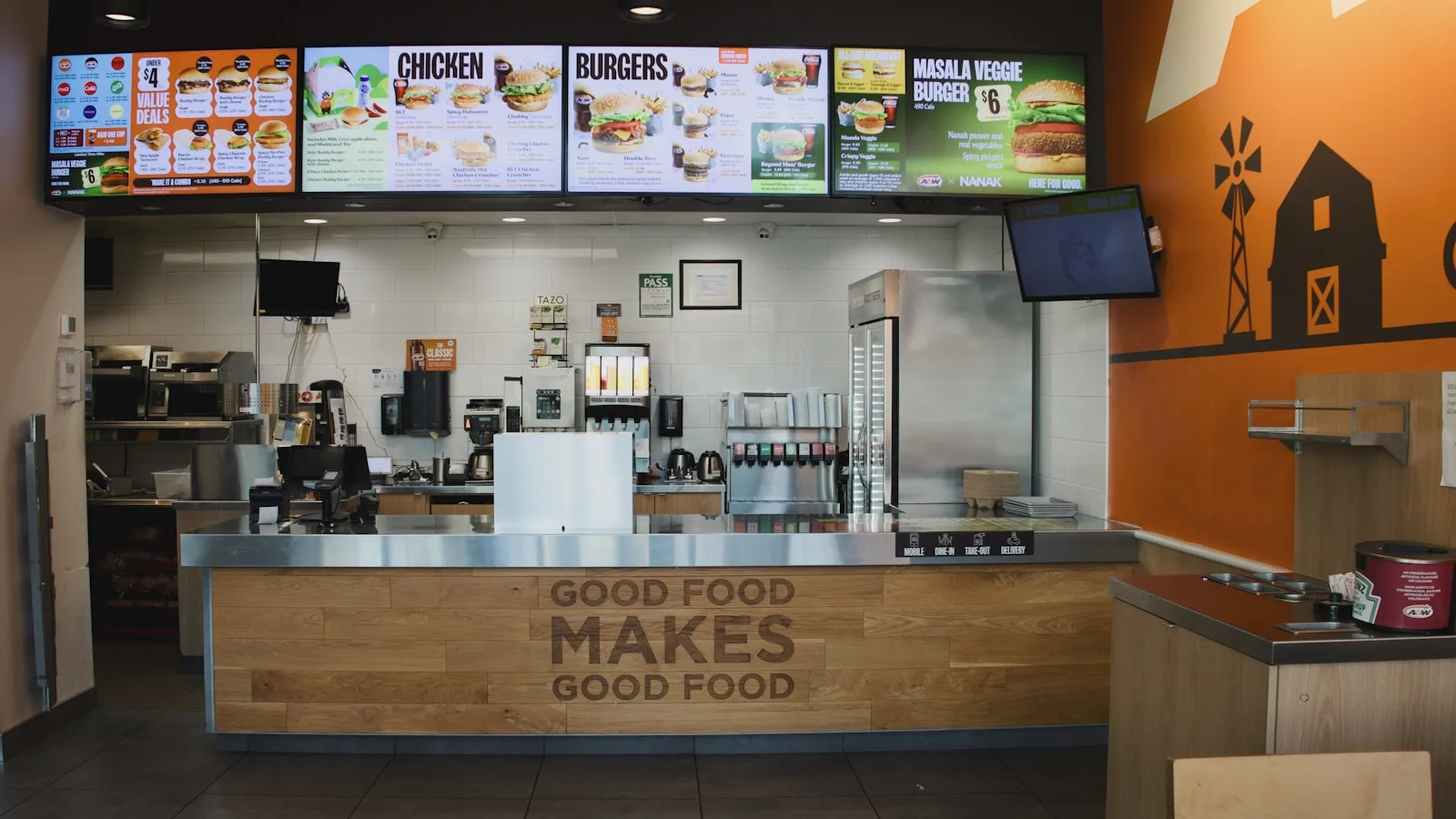
In short
- The queue is your constraint. A combo should be built in three taps, modifiers included.
- Build real combos, not separate products, or every order becomes manual data entry.
- A kitchen display replaces paper and gives you the real waiting time on every order.
- Delivery orders have to end up in your till, or your evening figures are wrong.
- Order numbers stop the crowd at the counter, and it is the most underrated function in the sector.
What makes this trade different
What hurts in fast food has nothing to do with a sit-down restaurant. Here are the real constraints.
| The constraint | What it demands of your till |
|---|---|
| The order is paid before it is served | No table management, but tracking of the order’s state, from payment to handing over the bag. |
| Combos with choices and extras | A real meal-deal system: the combo prompts for a drink, a side and a sauce without the cashier keying four lines. |
| The evening and weekend peak | Raw speed. Every tap removed from the screen is multiplied by two hundred orders. |
| Delivery through platforms | A way to get those orders into your figures, even if only through quick entry on a dedicated channel. |
| Eat in or take away | Two distinct channels, because the packaging and sometimes the price change, and because you want to compare them. |
| A young team with high turnover | An interface learned in twenty minutes, and limited rights on voids. |
The functions you genuinely need
Five functions decide the service. The rest can wait.
- Combos and modifiers: This is the structural one. A burger combo should prompt for the drink, the sauce and the side in sequence, with paid extras adding themselves to the price.
- The order number: The customer pays, gets a number, and waits without blocking the counter. It sounds trivial and it transforms a service.
- The kitchen display: Orders reach the kitchen with their time and state. No more dockets on the floor and orders served twice.
- Separate sales channels: Eat in, take away, delivery. Without that split you will never know what delivery really earns once commission is deducted.
- Offline operation: A Friday night does not stop because the connection dropped. Check that order taking and kitchen routing both survive without internet.
A typical day, from first customer to closing
An evening service, as it should run.
- The customer orders at the counter: the cashier builds the combo in three taps, extras included.
- Payment is taken immediately, in cash or by card.
- The order goes to the kitchen screen, with its number and time.
- The customer takes their number and steps away, the queue moves.
- The kitchen moves the order to preparing, then to ready.
- The number is called or displayed, the customer collects their bag.
- A platform order arrives: it is entered on the delivery channel so it stays in your figures.
- At the end of service, the report separates eat in, take away and delivery.
Hardware: what earns its place, and when
Fast food is the sector where hardware has the most impact, because it acts directly on throughput.
| Hardware | Why, in fast food | Priority |
|---|---|---|
| A fast touchscreen | All combo building goes through it. It is bottleneck number one. | Essential |
| An 80 mm thermal printer | The customer receipt with the order number. | Essential |
| A kitchen display | Beyond thirty orders a service it beats a printer comfortably and removes lost dockets. | Strongly advised |
| An order number screen | An ordinary television will do. It clears the counter better than any reorganisation. | Very useful |
| A cash drawer | Cash payment remains the majority in many neighbourhoods. | Essential |
| A second till station | Once the queue regularly passes six people, doubling the till costs less than losing customers in a hurry. | As volume grows |
In Morocco, in practice
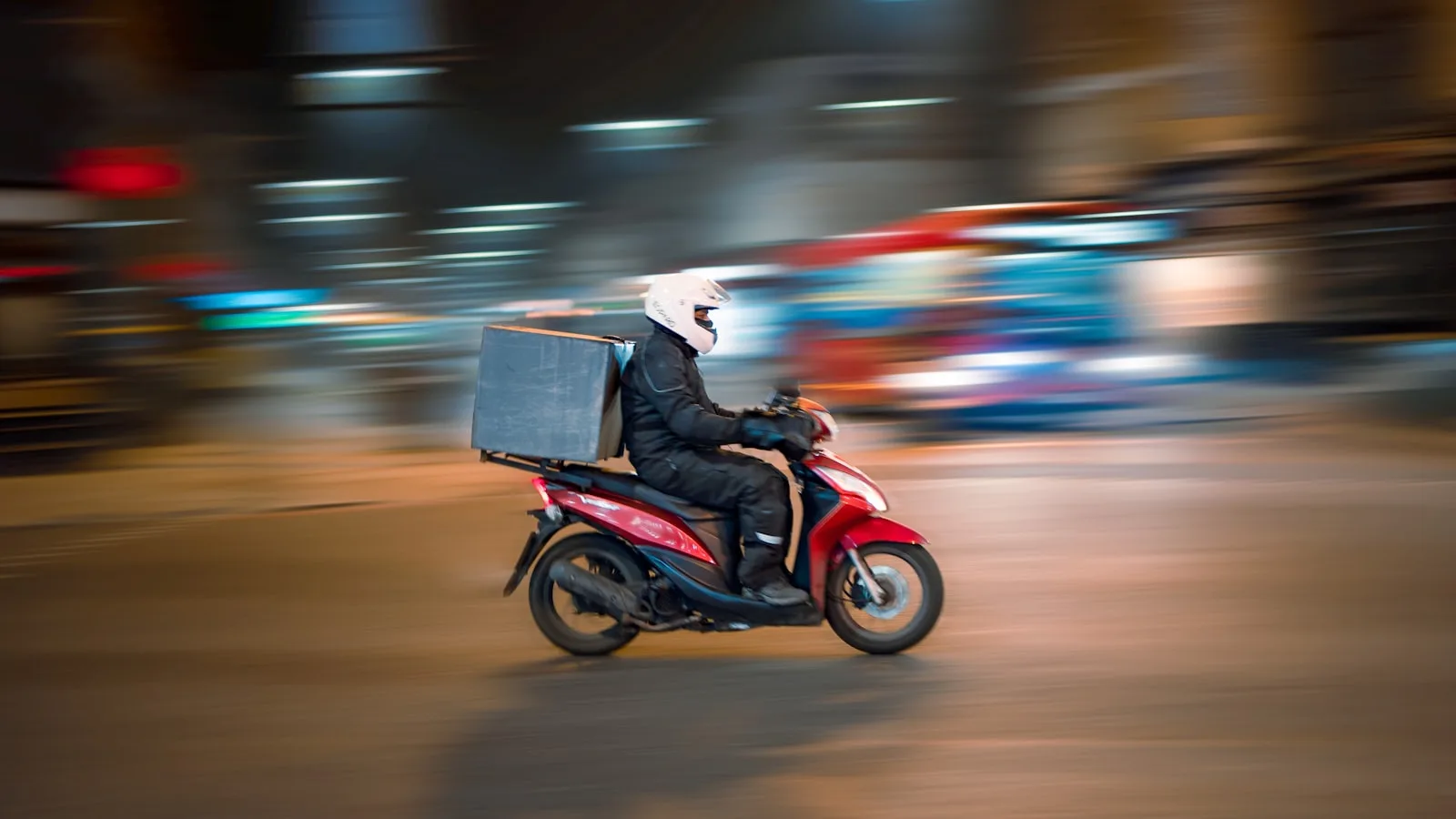
Delivery has transformed Moroccan fast food faster than anything else. In the big cities, in Casablanca, Rabat, Marrakesh and Tangier, a significant share of takings now goes through the platforms. The practical problem is always the same: orders arrive on a tablet supplied by the platform and never enter your till. As a result your stock is wrong, your evening reports are wrong, and you do not know what delivery really earns once commission is taken out.
The fix does not necessarily need an expensive integration. Create a “delivery” sales channel in your till and enter the orders there, even quickly, at the end of each rush. It is imperfect but it is enough to make your figures right. The same reasoning applies to phone orders, still very common in Fes, Meknes, Oujda and Agadir, where the habit of ringing the local snack bar has not gone away.
What it costs, and where to start
A shop’s budget splits in two, and the two should not be confused. Software on one side, hardware on the other. The software can be free: BelloPOS Lite is a free lifetime licence covering sales, stock, receipts, barcode scanning and up to three users, entirely offline. The hardware is paid for once and kept for years.
If the business grows, the two tiers above are bought once rather than subscribed to: BelloPOS Go at 9,000 MAD opens up unlimited users, roles and permissions and invoice export, and BelloPOS Pro at 40,000 MAD adds the analytics dashboard, reporting, networked terminals and the restaurant module (prices recorded in July 2026). Always run the five-year sum before comparing with a monthly subscription.
Your first seven days
- Day 1: create your simple products, sandwiches, drinks and sides.
- Day 2: build your combos with their choices and paid extras.
- Day 3: create the eat-in, takeaway and delivery channels.
- Day 4: connect the kitchen display and run twenty dummy orders.
- Day 5: train the team, focusing on extras and voids.
- Day 6: run a full service both ways and compare the totals.
- Day 7: switch over and look at your first report by channel.
The other solutions worth knowing
We are not the only option, and a good guide says so. Here are the international solutions that come up most, with an honest note on what each is worth to a Moroccan business.
| Tool | What it is worth, and for whom |
|---|---|
| Loyverse | A free till for Android tablets or iPad, very easy to pick up, with paid add-ons for team management and advanced stock. A good choice on the move, but the data lives in the cloud. |
| Odoo POS | Open source, and the till is only one module of a suite that also handles stock, purchasing and accounting. The strongest choice when you are growing and want everything in one place. In exchange, it takes the longest to set up. |
| Square | Very popular in North America and Europe. The software is free because Square earns from processing card payments. That is precisely the catch here: check first whether the service covers Morocco. |
Check this before choosing a foreign tool
A word of caution before getting excited about a foreign tool. Many of them are free because they earn from card acceptance, and that side depends on country-by-country agreements. In Morocco, card acceptance goes through a terminal supplied by your bank or an approved payment institution. Before building your business on an app, check two things: that it is actually available in Morocco, and that it can produce a document carrying the mandatory Moroccan invoice fields.
The mistakes we see most often
- Building combos as separate products. The cashier keys four lines instead of one, and the queue grows with every order.
- Leaving delivery orders out of the till. Your evening figures and your stock go wrong within the first week.
- Doing without order numbers. Without them everyone stays packed at the counter and service slows further.
- Neglecting paid extras. Extra cheese and sauce, served without being rung up, are an invisible daily leak.
- Letting everyone void. In fast food, unrestricted voids are the leading cause of cash differences.
Frequently asked questions
Which POS should I choose for a fast food outlet in Morocco?
A fast touchscreen till that handles real combos with choices and extras, shows orders on a kitchen display, separates eat-in, takeaway and delivery channels, and works without internet. Those four points decide your throughput on a Friday night.
How do I bring delivery platform orders into my till?
Automatic integration exists but stays expensive and depends on each platform opening up. The pragmatic approach, used by most independent outlets, is to create a “delivery” sales channel in the till and enter the orders there after each rush. Your figures and stock become correct again at no cost.
Is a kitchen display necessary in fast food?
Beyond about thirty orders a service, yes. It shows each order’s waiting time, lets you prioritise and removes paper dockets lost in the heat of service. It is also cheaper to run, since there are no rolls to buy.
How do I speed up the queue?
Three levers, in this order. First well-built combos, so the most frequent order takes three taps. Then order numbers, which free up the counter. Finally a second till station once the queue regularly passes six people. Software matters more than hardware on the first two.
How do I know whether delivery is profitable?
By treating it as a separate channel in your till, then comparing that channel’s revenue with the commission taken and the cost of packaging. Many outlets discover that delivery raises volume without improving the result. Without channel separation, the question has no answer.
Should extras be charged in the till?
Yes, and it is a source of margin many let slip. Extra cheese or an additional sauce, served without being entered, is a few dirhams per order and several thousand across a year. Create them as options attached to the combo so they add automatically.
Is a free POS suitable for a snack bar?
For a single-station outlet, BelloPOS Lite covers sales, stock and receipts free and offline. As soon as you want the kitchen display, networked terminals and detailed reports, BelloPOS Pro is the level to look at, on a single licence rather than a subscription.
What to take away
In fast food, a till is judged on throughput. Build real combos with extras, put a screen in the kitchen, give every order a number, and bring delivery into your figures. Those four decisions are worth more than any additional feature, and they show from the very first Friday night.
Where to go next
BelloPOS Lite is free for life to get started. If you need the kitchen display, networked terminals and the analytics dashboard, BelloPOS Pro includes them on a single licence, with no subscription and no dependence on the internet.
Read next
Other practical guides on the same subject: