
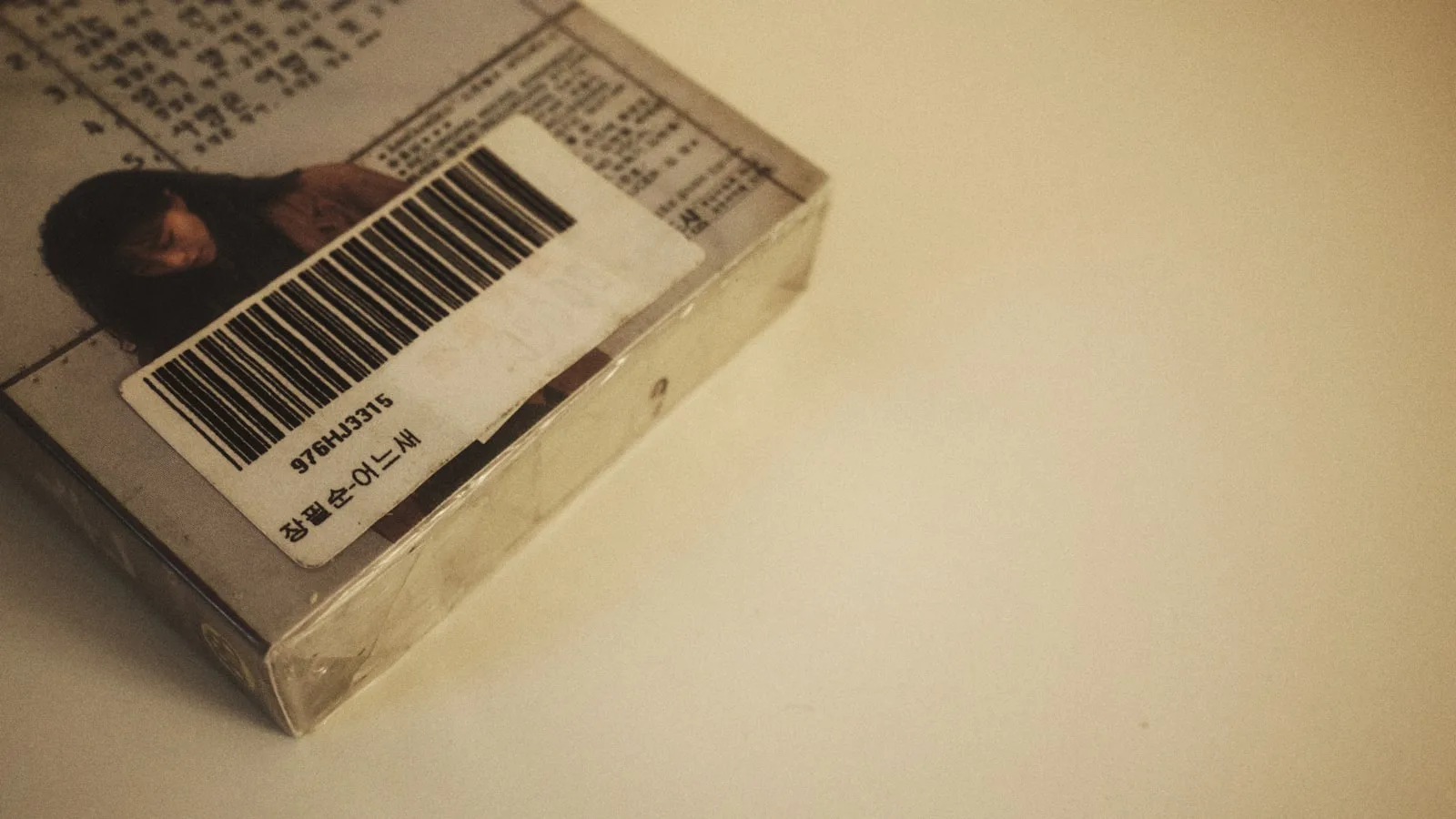
Here is the answer before the question: if you resell already-packaged products, you have no barcode to buy. They already carry one and you simply scan it. You buy an official code in order to sell somewhere other than your own shop, not to sell in it. Here is the difference between an official code and an internal one, and how to make the second in thirty seconds.
In short
- A GTIN is the number, an EAN-13 is the drawing that encodes it. The two are often spoken of as one thing.
- Packaged products already have one. Scan it, do not create another.
- An internal code is enough for loose goods, crafts, repackaged items and anything that does not leave your shop.
- Buy an official code from GS1 only if you want to sell through a supermarket, an online marketplace or for export.
- Never invent a number that looks like an EAN: it may already belong to someone.
Three words, three different things
The confusion comes from vocabulary that mixes a number, an image and an organisation. Separated, it all becomes simple.
| The term | What it is | What it changes for you |
|---|---|---|
| GTIN | The product’s identification number, unique worldwide. | It is the product’s identity, regardless of how it is printed. |
| EAN-13 | The bar representation of that number, the one the scanner reads. | It is what you see on the packaging. Thirteen digits in Europe and Morocco. |
| UPC | The North American equivalent, on twelve digits. | Your scanners read it too. Common on goods imported from the US. |
| GS1 | The organisation that allocates company prefixes in each country. | It is who you go to for an official code, and only if you need one. |
| Internal code | A number you create yourself for your own use. | Free, immediate, and perfectly sufficient inside your shop. |
Remember the last row. A barcode does not have to be official to work: the scanner reads bars, it checks with nobody. What official guarantees is that the number is unique outside your shop.
The only two situations that exist
Look at your stock and put it in one of the two. The answer to “must I buy a code” follows directly.
- The product already carries a barcode: That is everything industrial and packaged. Create nothing: scan the existing code when creating the product record and it becomes that item’s identifier in your shop. Creating a second code for the same product is the most common source of stock error.
- The product has no code: Loose goods, cut to order, crafts, imports without a label, in-house preparation, repackaged items. You generate an internal code from your software, print the label and stick it on at goods-in. The item becomes scannable like any other, without buying anything from anyone.
There is no third case in retail. The question of an official code only arises when the product has to be recognised by somebody else’s information system.
Making and printing your own labels
Five steps, understood once, and then it is a goods-in routine.
- Create the product record with its name, sale price and cost price.
- Generate the internal code from the software rather than inventing a number by hand: it guarantees no two of your items share a code.
- Choose the label format you already buy, and set it once in the print settings.
- Print the sheet and apply the labels at goods-in, never later: stock that reaches the shelf unlabelled never gets a label.
- Check by scanning a label at random before putting the rest of the box away.
For goods sold by weight, the label printed by the scale already contains the price and sometimes the weight inside the code itself. Check your till can read that format before organising your whole fresh section around it.
Never recycle another product’s number
Two bad habits cost dearly later. The first is reusing a similar product’s barcode, for instance sticking one perfume’s label on another size of the same perfume: your stock becomes wrong and you will never know which of the two sells. The second is inventing a thirteen-digit number that looks like an EAN: it may belong to a real product, and the day you receive one, the two merge in your catalogue.
The Moroccan case: imports, loose goods and supermarkets
A large share of the goods sold in Morocco arrives with no usable code: bulk imports, sacks opened and reweighed, crafts, textiles by the piece, fresh goods prepared on site. That is exactly where the internal label makes all the difference, because without it there is no scanning, no quick stock take and no reliable margin tracking. A label printer is therefore a better return than a touchscreen, and far cheaper.
An official code becomes necessary in one scenario, but a real one: you make or pack a product under your own brand and want to sell it through a supermarket, an online marketplace or for export. There the buyer will require an official GTIN, because it is their system that must recognise your item. In that case approach your country’s GS1 organisation for the current terms and tariff: they vary by country and by company size, and we do not reproduce them here rather than publish an out-of-date figure.
When to buy an official code: the list
If none of these lines applies to you, keep your money.
- You want your product listed in a supermarket.
- You sell on an online marketplace that requires a GTIN to create the listing.
- You export, or sell to distributors who resell in turn.
- You manufacture under your own brand and want the product identifiable everywhere, not just in your shop.
- Otherwise: an internal code, printed by you, and the matter is closed.
Mistakes to avoid
- Creating a second code for a product that has one. You duplicate the stock line.
- Inventing a thirteen-digit number instead of letting the software generate one.
- Labelling later. What reaches the shelf unlabelled never gets a label.
- Buying an official prefix for internal use: you pay for a worldwide uniqueness you have no use for.
- Putting the same label on two sizes of the same product, which makes the margin impossible to calculate.
Frequently asked questions
What is the difference between a GTIN and an EAN?
The GTIN is the number that identifies the product; the EAN-13 is the bar representation of that number, the one the scanner reads. In everyday conversation both words are used for the same thing, but one is the identity and the other is its printing.
Do I need to buy a barcode to sell in my own shop?
No. Packaged products already carry one, which you simply scan. For anything without one, an internal code generated by your software and printed on a label is perfectly sufficient: the scanner reads bars, it verifies the number’s origin with nobody.
When do I need an official GS1 code?
Only when your product must be recognised outside your own shop: listing in a supermarket, selling on an online marketplace that requires it, exporting, or distribution through resellers. In that case check with your country’s GS1 organisation for current terms and pricing.
How do I create a barcode for a loose product?
Create the product record, let the software generate the code, print the label in the size you use and apply it at goods-in. BelloPOS generates and prints these labels directly, including in the free version.
Can I reuse another product’s barcode?
No, and it is the most expensive mistake in stock management. Two items sharing a code become one item in your catalogue: the quantities add up, the margins mix, and you no longer know which one actually sells.
What to take away
Ask yourself one question: does this product need to be recognised outside my shop? If the answer is no, which it is for the overwhelming majority of retailers, an internal code printed by you does exactly the same job and costs nothing. Save buying an official prefix for the day you put your own brand on someone else’s shelf.
Sources
The figures and rules quoted above come from these pages, read on the date given in the article.
Generate and print your labels
BelloPOS creates a barcode for every product that lacks one and prints your label sheets in the size you already buy. Works with any USB or Bluetooth scanner. The Lite licence is free for life.
Read next
Other practical guides on the same subject: