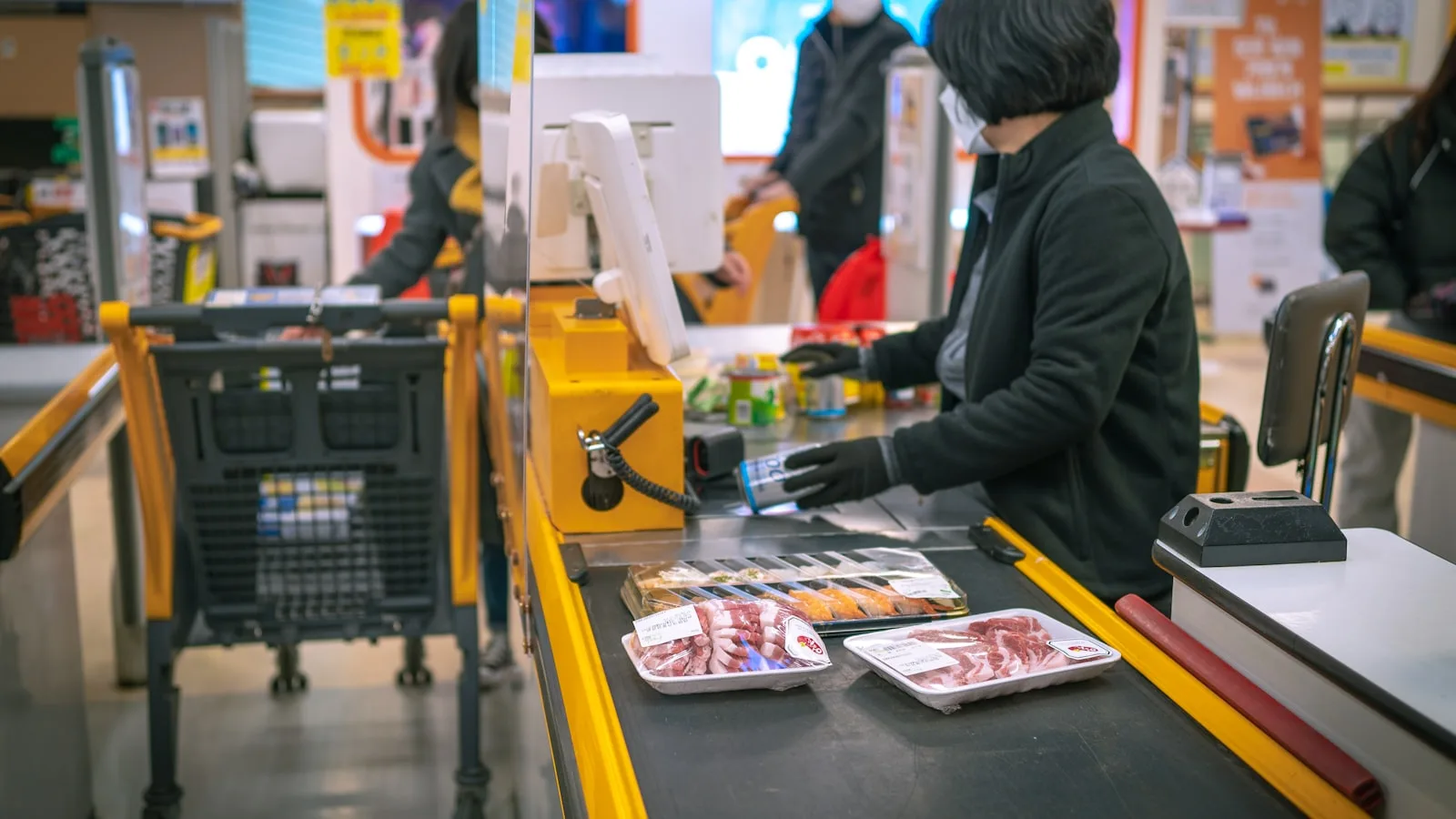
A supermarket does not judge a till on its features but on its throughput: how many items a minute, how many product lines held, how many tills on the same database, and what happens when a product passes its date. Here is how uniCenta oPOS, Aronium and BelloPOS behave on those four points.
The short answer
- Multi-till is the first criterion. uniCenta does it natively on MySQL, Aronium does it with its Pro version at $100 a year per store, BelloPOS with the networked terminals in its Pro tier.
- Aronium has a free “expiration date” plugin, which is exactly what a grocery needs, and many competitors charge for it.
- uniCenta is the best equipped on depth: multi-store, multi-terminal, more than fifty reports, MySQL or MariaDB database.
- BelloPOS Lite already covers scanning, stock and receipts for free, but stops at three users, which is few for a supermarket.
- Throughput is tested, not read. Scan fifty items with a stopwatch on each program before deciding.
The solutions compared
Three desktop programs capable of handling volume. The differences are not in the till itself, which is decent everywhere, but in what happens behind it: the stock, the shelves and the number of stations.
uniCenta oPOS

A Java desktop till published under the GNU GPL v3 free licence. Multi-location, multi-terminal, multi-user, 17 languages, backed by a MySQL or MariaDB database. Version 5.4.0 added a WooCommerce integration. The project is distributed on SourceForge, where its last update is dated 10 August 2025.
Aronium

A native Windows till in two editions: Aronium Lite, free and with no registration, and Aronium Pro, which connects several registers to one database. Everything else is added through plugins, free or paid, billed per store.
BelloPOS

Our Windows till software, built in Morocco. It runs 100% offline: no sale depends on the connection. The interface and the receipts exist in French, Arabic and English. Three tiers: Lite free for life, Go and Pro bought once, never subscribed to.
The comparison, criterion by criterion
A supermarket’s criteria, in the order they matter day to day.
| The criterion | uniCenta oPOS | Aronium | BelloPOS |
|---|---|---|---|
| Several tills on one database | Yes, natively, on MySQL or MariaDB. That is its original design. | Yes, with Aronium Pro at $100 a year per store. | Networked terminals on BelloPOS Pro. |
| Barcode scanning | Yes, with catalogue import by category and by product. | Yes, and the application has a reputation for fast scanning. | Yes, from the free Lite tier. |
| Expiry dates | Handled through product fields and reports. | Dedicated plugin, free, with reports on products about to expire. | Stock tracking included. Date control is handled through batches and counts. |
| Stock depth and reporting | The most complete: more than fifty reports, multi-store. | Free stock control plugin, with low stock alerts. | Tracking included from Lite, analytics dashboard on Pro. |
| Purchasing and suppliers | Purchase management and multi-site stock. | Covered by the stock plugins. | Catalogue, stock and customers included; analytics on Pro. |
| Number of users | Unlimited. | Unlimited. | 3 on Lite, unlimited from Go. |
| Works offline | Yes. | Yes. | Yes, 100% offline. |
| Moroccan e-invoicing | No module. | No Moroccan module. | Invoice export on Go and Pro. |
| Realistic 5-year cost | 0 MAD in licences, plus database administration. | About 4,700 MAD per store. | 9,000 MAD for Go, 40,000 MAD for Pro, once. |
| Who it suits | A grocery or supermarket with a technical profile available. | A one or two till grocery wanting the lowest cost. | A Moroccan business wanting Arabic receipts and local support. |
What it really costs over five years
For a supermarket, the useful comparison includes the tier that opens up multi-till with each of them.
| The solution | Over 1 year | Over 3 years | Over 5 years |
|---|---|---|---|
| Aronium Pro ($100/year per store) | 940 MAD | 2,820 MAD | 4,700 MAD |
| BelloPOS Go (9,000 MAD, once) | 9,000 MAD | 9,000 MAD | 9,000 MAD |
| BelloPOS Pro (40,000 MAD, once) | 40,000 MAD | 40,000 MAD | 40,000 MAD |
| Moroccan reference: Caisse Manager, till + stock + mobile (410 MAD/month) | 4,920 MAD | 14,760 MAD | 24,600 MAD |
The amounts above are worked out from the public prices recorded on 27 July 2026, with VAT added where a price is quoted excluding tax, and with no commercial discount. For prices in dollars, the rate used: 1 USD = 9.4 MAD, recorded 27 July 2026. Redo the sum with the day’s prices before you decide: they move, and it is your money.
The sum still leans towards Aronium over five years, and that makes sense for a one or two till grocery. Watch two effects that flip the trend quickly though: their price is per store, so three groceries means three subscriptions, and a supermarket nearly always ends up wanting functions that with us sit in the Pro tier and trigger no renewal at all.
Checkout throughput, and how to measure it yourself
Throughput is the only criterion visible to the naked eye in a supermarket, and the one no product sheet talks about. It depends on three things you can test in twenty minutes: how fast the software displays an item after the scanner beeps, how many keystrokes to take a mixed cash-plus-card payment, and how long it takes to find a product with no barcode.
- Prepare a basket of fifty real items, with heavy products, fruit to weigh and two items with no barcode.
- Scan them in one run with a stopwatch, on each of the three programs installed on the same machine.
- Take a mixed payment: part cash, part card, and count the keystrokes.
- Void an item in the middle of the basket, then continue. That is the gesture that costs the most seconds in real life.
- Repeat the test with a second connected station if you are considering several tills, because behaviour changes when two stations write to the same database.
Expiry dates, a point where Aronium scores
What is free at Aronium deserves spelling out, because it is broader than people assume. Aronium Lite first, at $0, with no registration and no licence, in its publisher’s words: a “fully functional” version usable indefinitely. Then eight free plugins, according to their own page: stock control, expiration dates, named orders, takeaway, notes, dual currency, maximum retail price, and the Saudi e-invoicing plugin. Several competitors charge for the equivalent.
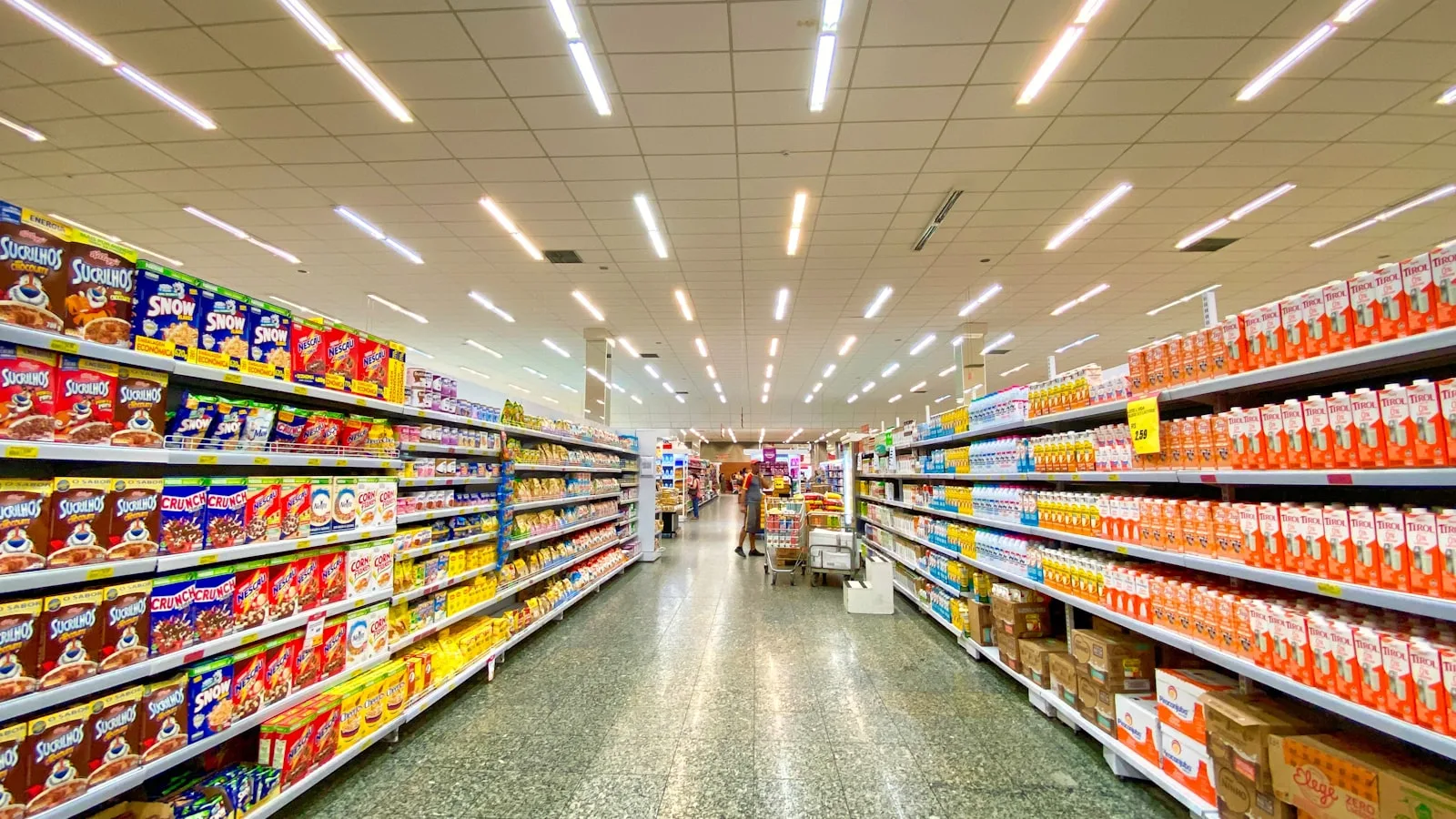
For a grocery or supermarket, Aronium’s “expiration date” plugin deserves singling out: it tracks dates product by product and produces reports of items about to expire. It is free, it is exactly what a fresh section needs, and it is a real point in their favour that we are not going to play down. With uniCenta and with us, that tracking is built from batches, counts and stock reports rather than a dedicated module.
What breaks a supermarket, and which none of the three fixes alone
Two Moroccan realities dominate running a supermarket and no software solves them for you. The first is goods with no barcode: imports, loose products, repackaged items. The answer is a label printer used from the moment of delivery, never later. The second is buying for cash with no usable document: note the quantity and purchase price in the till at the moment of delivery, or your margin becomes incalculable, whatever the software.
How to choose: the twenty-minute method
The general method, plus the two tests specific to volume.
- Count your real needs before you look at a single price. How many tills, how many users, do you invoice businesses, do you need stock, do you take delivery orders. Five answers, and half the offers rule themselves out. Our guide to choosing a till works through this questionnaire.
- Test the checkout, not the demo. Ask to ring up ten items, one return and one split payment, yourself, and time it. A well-rehearsed demo tells you nothing about what your cashier will face on a Saturday.
- Pull the internet cable and try to sell. That one test splits the whole market in two, and it takes thirty seconds. We go through it in detail in our offline or cloud POS comparison.
- Ask for an export of your own data before you pay anything. Products, customers, sales, in a file you can open. If the answer is vague, you already know how this ends.
- Add up five years, not one month. A subscription is compared with a one-off purchase over the time you will actually use it.
- Check that the receipt prints correctly in Arabic before you commit. On a thermal printer that is not a given, and it takes a minute to see.
- Ask who answers the phone on a Saturday at 8pm, and in which language. That is exactly when a till breaks.
- Time fifty items on each candidate. It is the only throughput test that does not lie.
- Test with two connected stations if you plan several tills. Software that is fast alone can slow down with two.
What each solution does better
uniCenta oPOS
Its licence. uniCenta oPOS is free software under the GNU GPL v3: you can install it on as many machines and in as many shops as you like, with no licence fee, and nobody can withdraw your right to use it. The database is yours, readable, on your own server. If independence from a software publisher matters to you more than anything else, this is the right answer and we are not going to pretend otherwise. Its multi-location support and its fifty reports are serious work, and rare at this price.
Aronium
Its plugin model, and its value for money. Aronium Lite is free, complete and asks for no registration: you download it and you sell. Aronium Pro at 100 dollars a year per store is honestly cheap for what it does, and the free plugins (stock control, expiry dates, named orders, takeaway, notes, dual currency) cover needs that others charge for. The publisher keeps a detailed changelog, which is a good sign about a piece of software’s health.
Mistakes to avoid
- Choosing without timing a real basket. Throughput does not show on a product sheet.
- Taking BelloPOS Lite for a supermarket with four cashiers. The limit is three users, and it will block you.
- Forgetting the label printer. With no barcode there is neither fast scanning nor a reliable count.
- Counting Aronium’s price in the singular when you have three groceries. The price is per store.
- Installing uniCenta with no database backup plan. A supermarket that loses its theoretical stock loses weeks.
Frequently asked questions
Which POS software for a supermarket in Morocco?
For a one or two till grocery, Aronium Pro is the cheapest and its free stock control and expiration date plugins cover the essentials. For higher volume with a technical profile, uniCenta oPOS is the best equipped. For a business wanting Arabic receipts and local support, BelloPOS Go or Pro.
Can you connect several tills?
Yes, with all three, but not at the same price. uniCenta does it natively on a MySQL or MariaDB database. Aronium does it with its Pro version at $100 a year per store. BelloPOS does it with the networked terminals in its Pro tier.
How do you track expiry dates?
Aronium offers a dedicated free plugin, with reports of products about to expire. With uniCenta and BelloPOS, tracking goes through batches, counts and stock reports. For a significant fresh section, test this point first.
How many users with BelloPOS Lite?
Three. For a supermarket with several cashiers and rotating teams, you need BelloPOS Go at 9,000 MAD once, which opens up unlimited users along with roles and permissions.
Do these programs handle suppliers and purchasing?
uniCenta is the most complete on that ground, with multi-site stock management. Aronium covers it through its stock control plugins. BelloPOS tracks stock from Lite and adds an analytics dashboard on Pro.
Is internet required?
No. All three are desktop programs working locally, which is a decisive advantage for a supermarket: a queue on a Saturday afternoon cannot wait for the line to come back.
Our recommendation
One or two till grocery: Aronium Pro. About 940 MAD a year, free stock control and expiry dates, and fast scanning. It is the best buy on this page for that format.
Supermarket with several tills and a technical profile: uniCenta oPOS. Native multi-terminal, multi-store and fifty reports make it the best equipped of the three, provided you have someone to keep the database running.
Moroccan business wanting Arabic and local support: BelloPOS Go, then Pro if you network several stations. Paid once, offline, with someone on the phone who speaks Darija when a till locks up on a Saturday.
Sources
Every claim made here about a competing product comes from its publisher’s own public page, consulted on 27 July 2026. No figure is taken from a review aggregator or another comparison.
- uniCenta oPOS: https://unicenta.com/
- uniCenta oPOS: https://sourceforge.net/projects/unicentaopos/
- Aronium: https://www.aronium.com/
- Aronium: https://www.aronium.com/en/plugins
- BelloPOS: https://bellocommerce.com/fr/bellopos/
- BelloPOS: https://bellocommerce.com/fr/bellopos/pricing/
The trademarks named here belong to their respective owners. They are mentioned for the purpose of comparison, and this article implies no partnership with or endorsement by them.
Measure throughput before choosing
Install BelloPOS Lite free and time fifty real items. Then compare with the other two on the same machine and the same basket.
Read next
Other practical guides on the same subject: